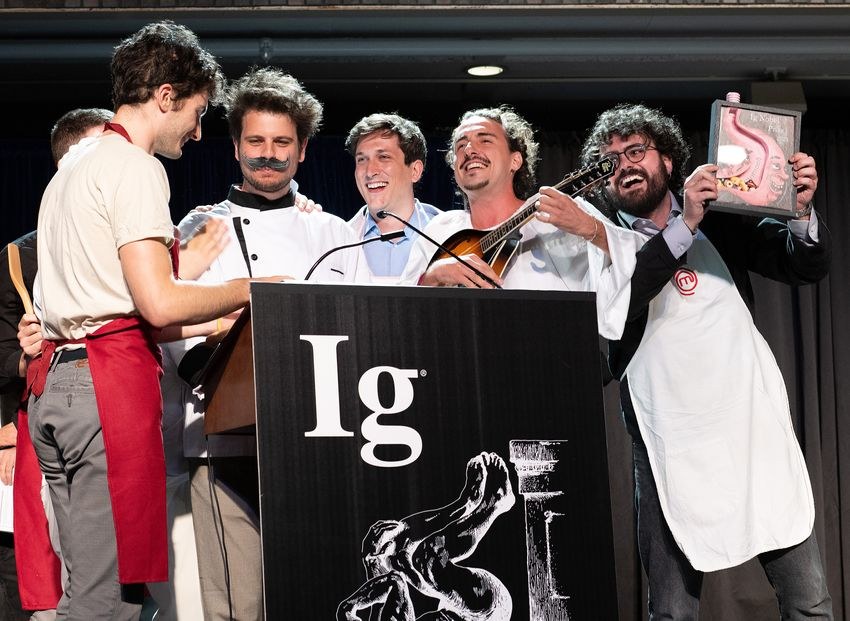
At the 2025 Ig Nobel Prizes, a team of physicists answered a question every home cook has wrestled with: how do you make Cacio e Pepe (just pasta, pecorino cheese and pepper) without the sauce going lumpy?
They tested how much starch, how much water and which helpers keep the sauce smooth as it heats up. The result is a map of the sauce’s “phases”, including the dreaded Mozzarella Phase, when the cheese gives up and turns into one big rubbery clump.
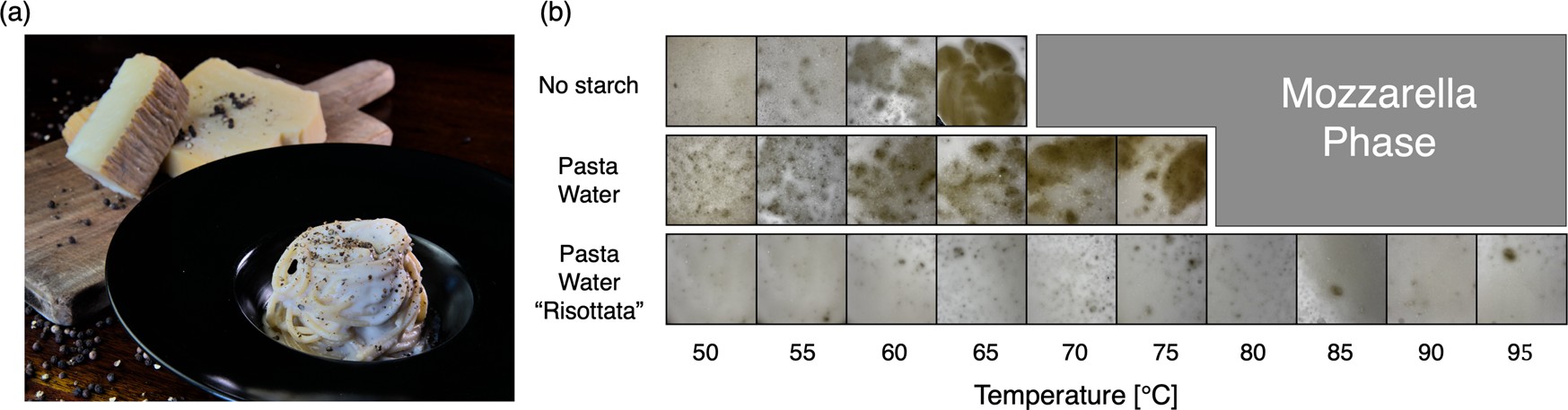
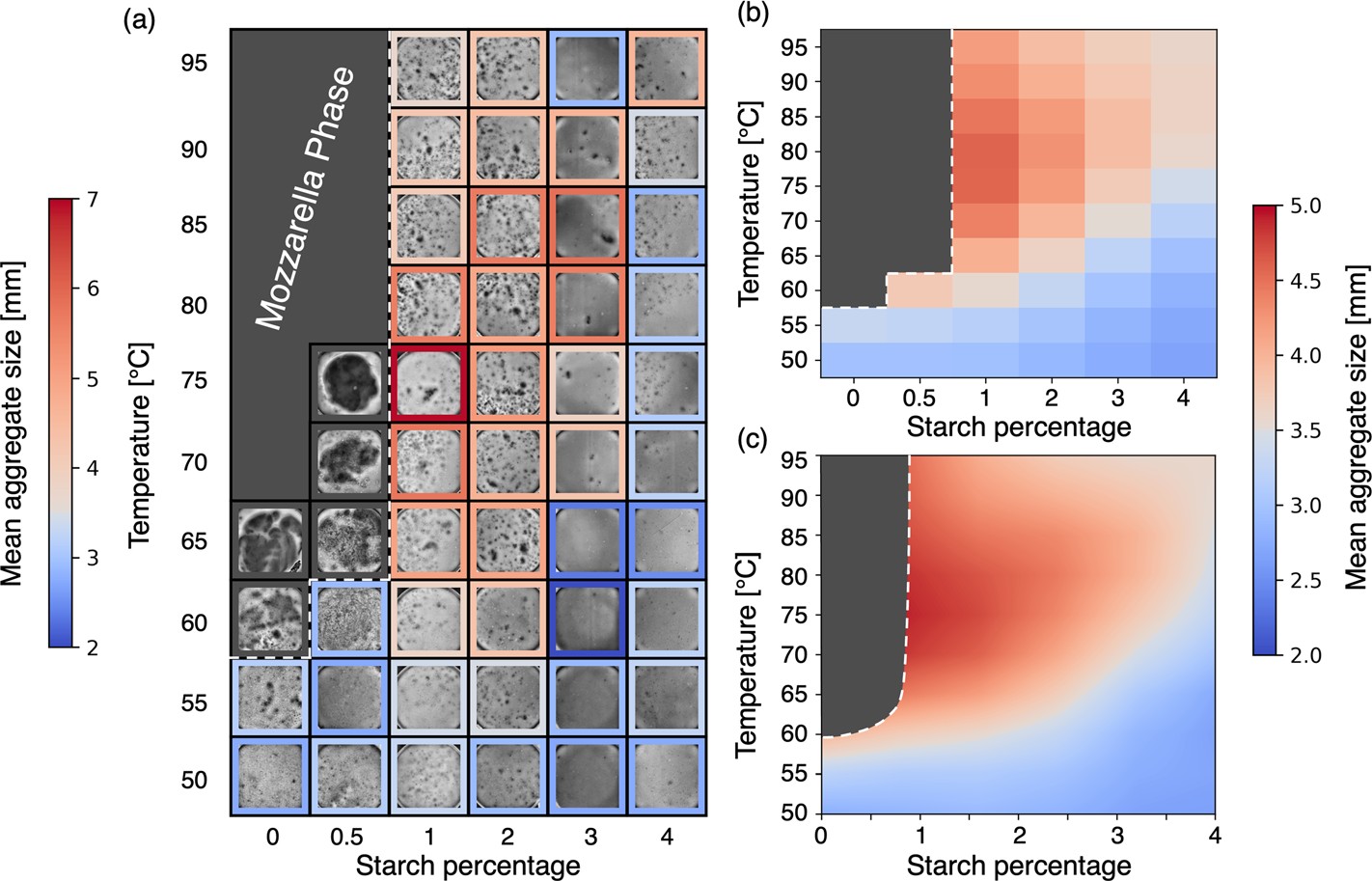
Cheese mixed with plain water (top), normal pasta water (middle) and extra-starchy pasta water (bottom), then slowly heated. The more starch, the fewer and smaller the lumps. With plain water, the cheese collapses into the Mozzarella Phase from about 70 °C.
01
What did they find?
Mozzarella Phase
Too little starch and the cheese melts into one big rubbery lump.
Starch = Key
Starch from the pasta water stops cheese proteins sticking to each other.
Cheese Concentration Matters
Equal parts cheese and water is the easiest mix to break. A little more or less water is safer.
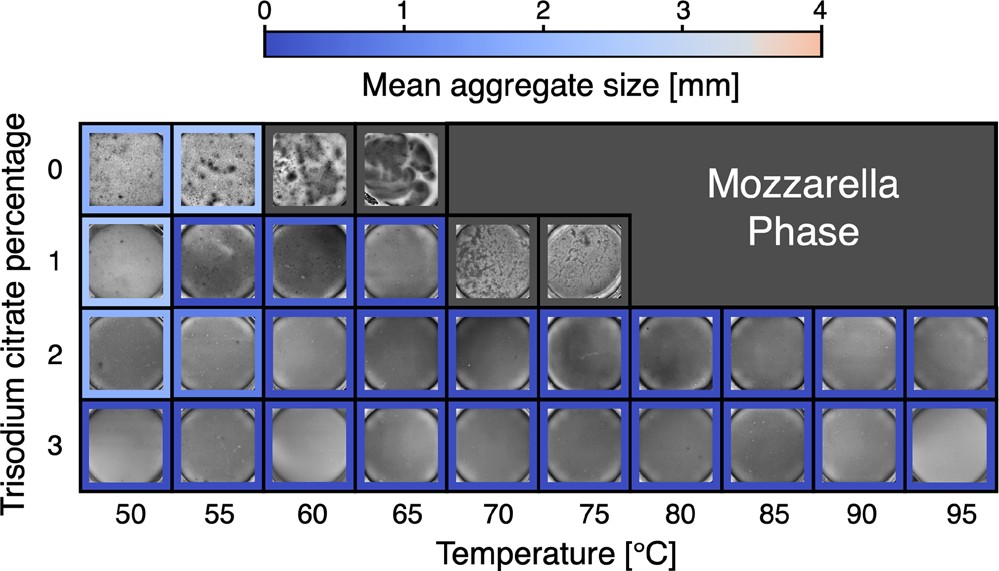
Trisodium citrate
A pinch of this salt stops lumps completely, but it isn’t traditional.
Starch keeps the sauce together; citrate does it like a switch
Each square is the sauce at one temperature. Dark means it has split into one giant lump.
02
So, How did they actually prove it?
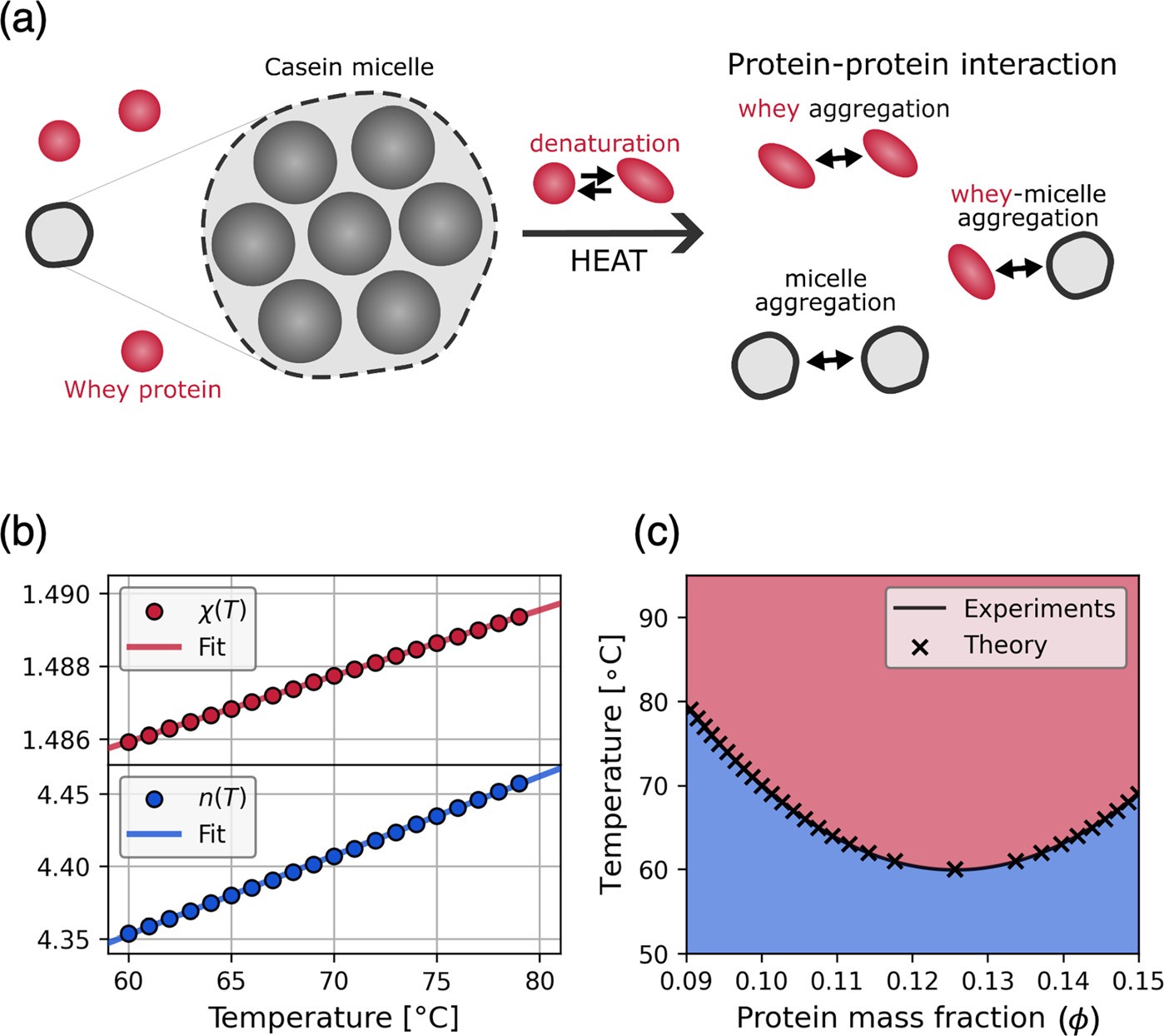
They described the sauce with one equation from physics, the binary mixture free-energy model. It treats the sauce as just two ingredients, cheese proteins and “everything else” (water, starch, salt and fat), and scores whether that mix would rather stay blended or separate. Three things pull against each other:
Entropy term
“ideas want to spread out” → proteins and water naturally mix.
Interaction term
“friendship or rivalry” → proteins either cooperate with water (smooth sauce) or gang up on each other (clumps).
Temperature
“energy level of the party” → higher heat makes proteins more likely to denature and aggregate.
How much water should you add?
Pick how much water goes in, as a percentage of the cheese weight. The dot shows roughly the temperature where lumps start. Equal parts (100 %) is the touchiest mix.
Equal weights of cheese and water: the bottom of the U, so this is the mix most likely to go lumpy.
03
The recipe, by the numbers
The paper ends with a “scientific recipe”. These are the numbers that matter.
Starch, compared with the cheese weight. The sweet spot for a smooth sauce.
Water, compared with the cheese weight. A little less than equal parts is safer.
Around here the cheese starts to clump, so let the pasta cool for a moment before mixing.
A properly stabilised sauce can be reheated this hot in a pan without splitting.
Starch works on a slope; citrate works like a switch
Starch, % of cheese weight
Trisodium citrate, % of cheese weight

Tradition check
Citrate works even better than starch, but it isn’t in the traditional recipe, and the authors found it slightly dulls the cheese flavour. Use it in a Roman kitchen at your own risk.
Sauce for two
300 g pasta · 200 g Pecorino Romano
- 1Stir 5 g of corn or potato starch into 50 g of water and heat gently until it thickens and turns almost clear.
- 2Add 100 g of cold water, then blend in the cheese until smooth.
- 3Toast black pepper in a pan and stir it in.
- 4Cook the pasta al dente, keep some pasta water, and let the drained pasta cool for up to a minute.
- 5Mix, loosen with pasta water as needed. Reheats happily in a pan.
04
It matters? How?
While the idea of exploring particular dish might seem kind of excessive, but from it comes a serious exploration of phase separation, emulsions, and protein aggregation; concepts that apply not only to food but also to materials science, biochemistry, and even engineering. Understanding how mixtures behave under heat and concentration changes helps. Plus, it’s a reminder that cooking is chemistry in action.
05
TLDR?
Think of the pasta sauce as a dance floor...
- 1Protein dances in the midst of Water as music and Starch as their environment
- 2Entropy as the instructor suggest that they dance freely and spread out
- 3But some Protein wanna dance closer due to interaction between them
- 4Temperature set the “music” (water) and made the Protein even closer
06
Personal Take
I love how this paper turns a kitchen challenge into a physics experiment. As a former international student, there were times when I spent an evening trying to experiment different ways to cook pasta. It’s a perfect example of how engineering curiosity meets everyday life. The “Mozzarella Phase” is not just a funny name — it’s a vivid reminder that even simple recipes hide complex thermodynamics. It confirmed something I'd felt intuitively — that a little starch changes the whole texture of a sauce. While the flavour of the food itself is more of personal taste, this paper gives an idea of what a true preparation to which we could do for our creation. While the application of this particular equation and model is designed for Cacio e Pepe, I believe some dish in Asia and Africa could also benefit in this, such as Tsukemen of which it uses thick broth as dipping sauce to enrich its flavour. For me, this resonates with the idea that science and music share a rhythm: both are about finding harmony in systems, whether it’s molecules in sauce or notes in a melody.
← Back to all talks
Discussion
Comments
Register with your email to join the discussion
No comments yet. Be the first to share your thoughts.