← All projects

Dissertation 02 — MSc Mechanical Engineering

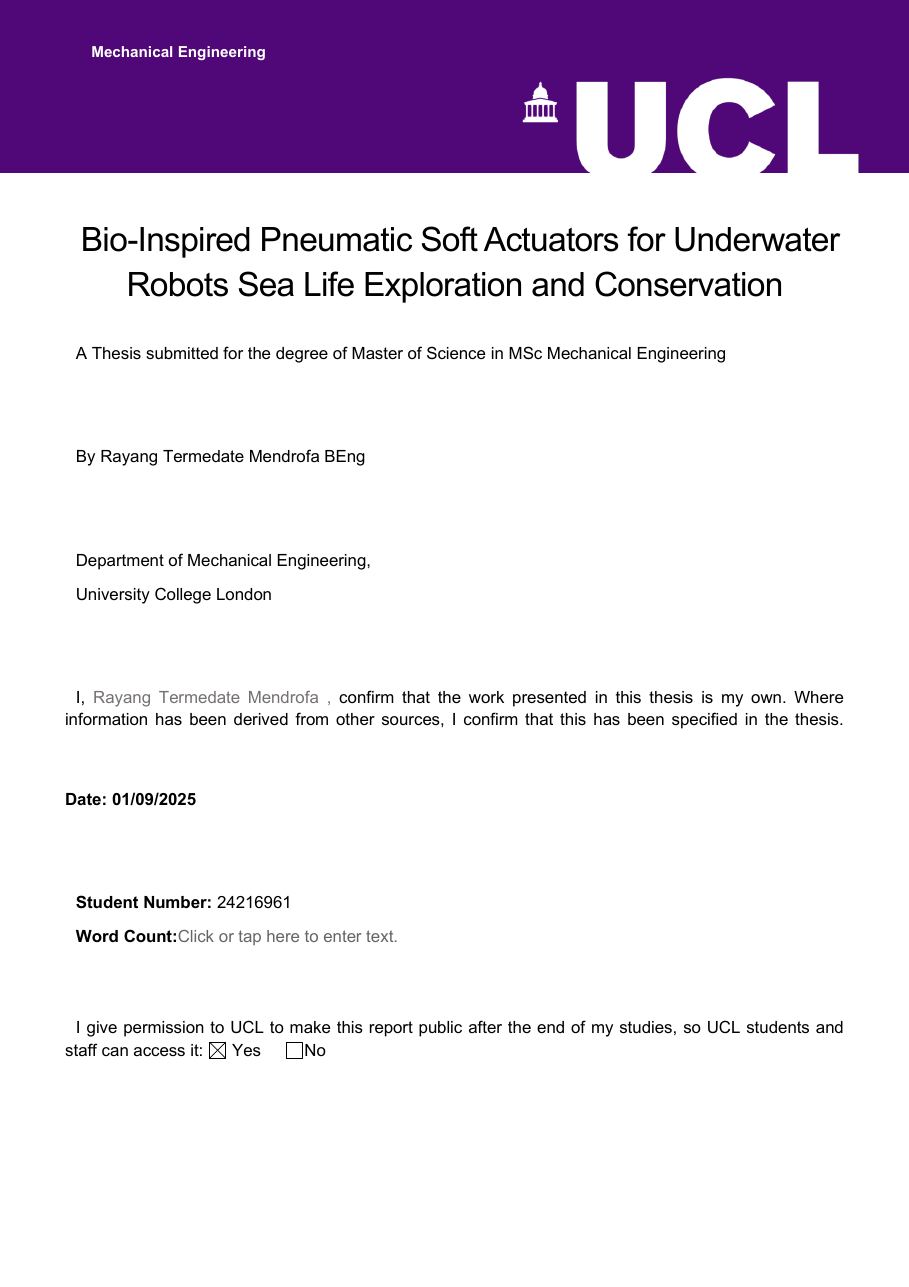
Bio-Inspired Pneumatic Soft Actuators for Underwater Robots Sea Life Exploration and Conservation

UCL logo

University College London · MSc Thesis AY24-25
Dated 01/09/2025 · Supervisor: Dr Adam Wojcik

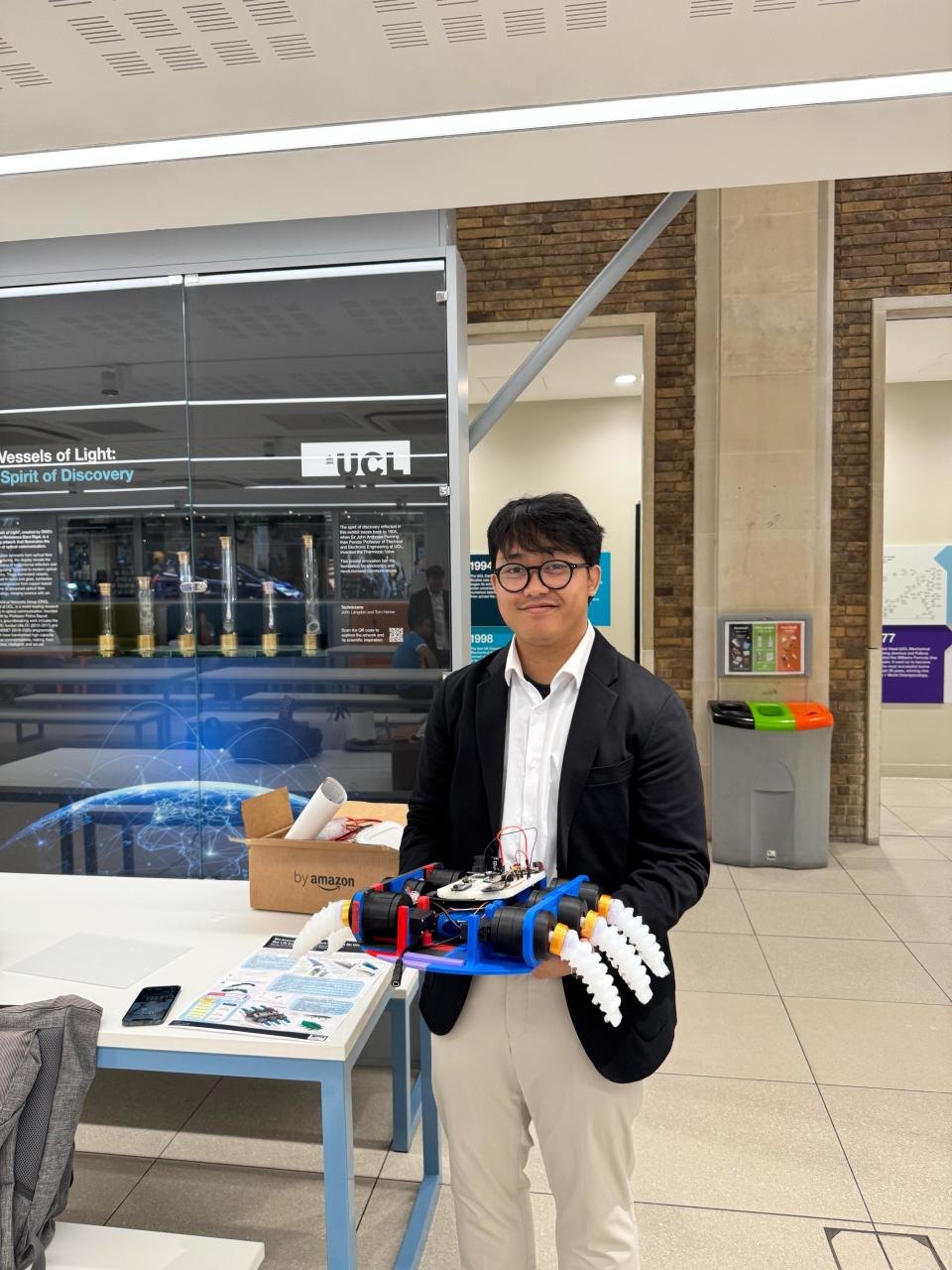
Rayang holding the finished soft underwater robot prototype at UCL
FIG. 01 — SHOWCASING THE PROTOTYPE AT UCL

In a nutshell

I designed soft, squishy robot limbs — borrowed from manta rays and trilobites — that bend when water is pumped into them, so an underwater robot can study coral reefs without breaking them.

2sea-creature limb designs
11–20%more bend from 30° tilted chambers
00-30Ecoflex silicone — very soft
≈2.2 kgfull prototype mass

From screen to bench

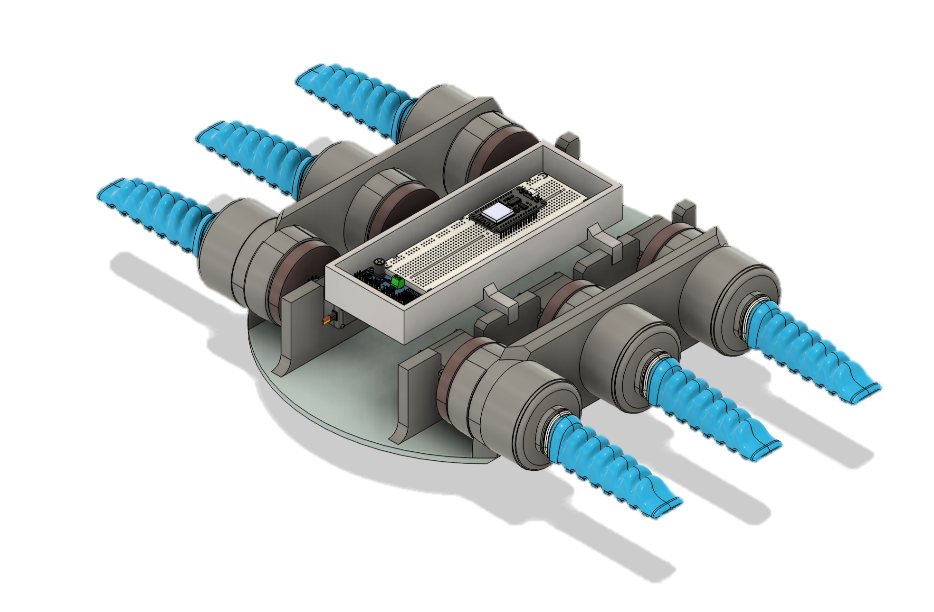
3D render of the soft underwater robot with blue silicone limbs
FIG. 02 — THE DESIGN, RENDERED
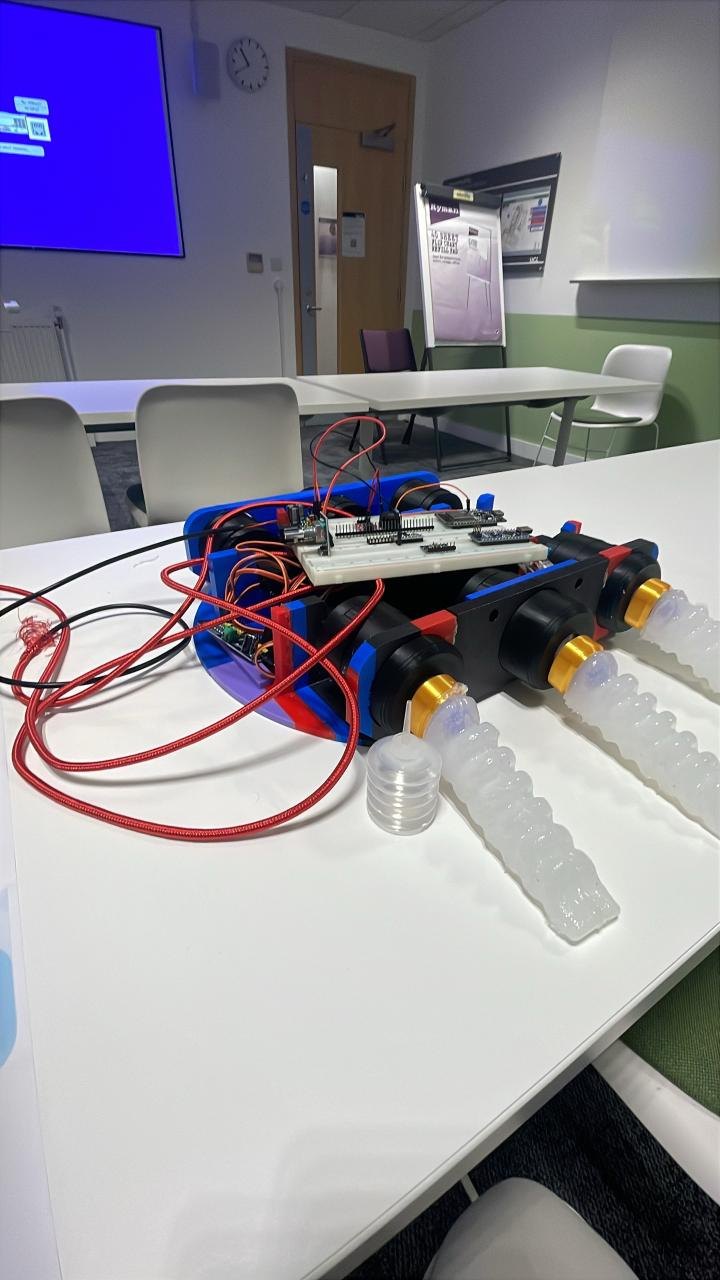
The built prototype on a table: blue printed chassis, bellows actuators, breadboard electronics and translucent silicone limbs
FIG. 03 — THE BUILT PROTOTYPE
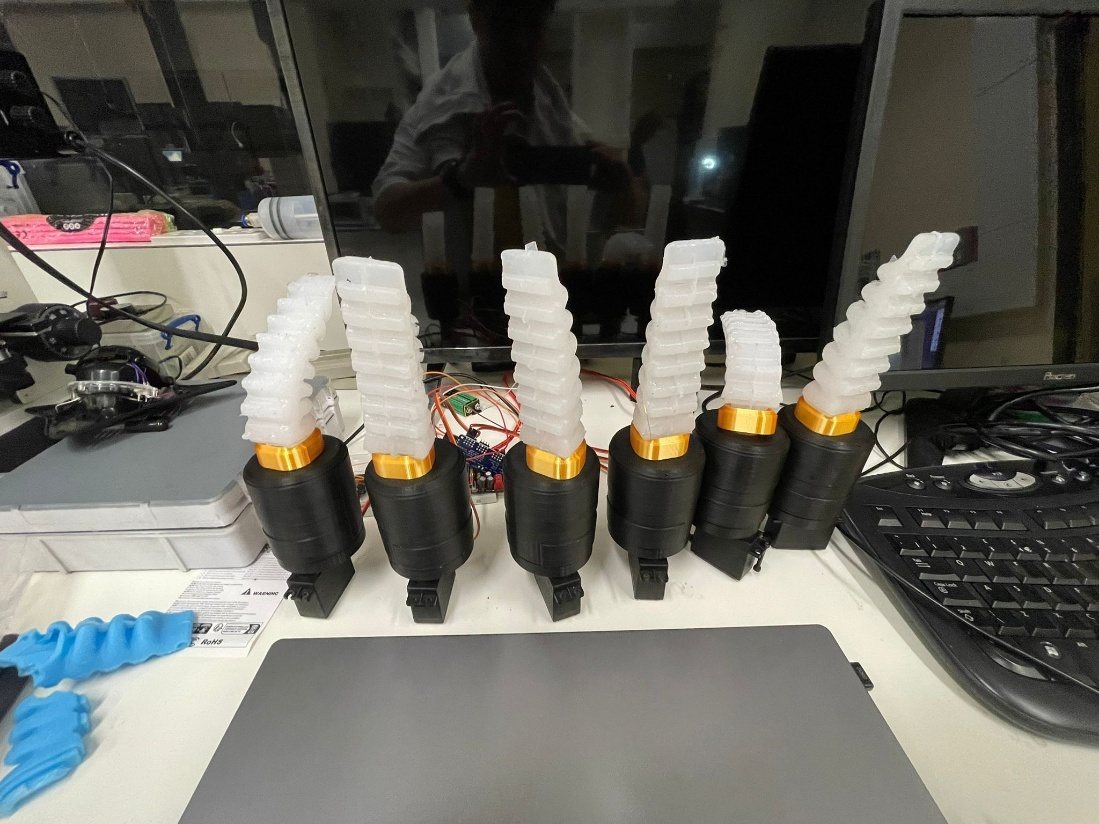
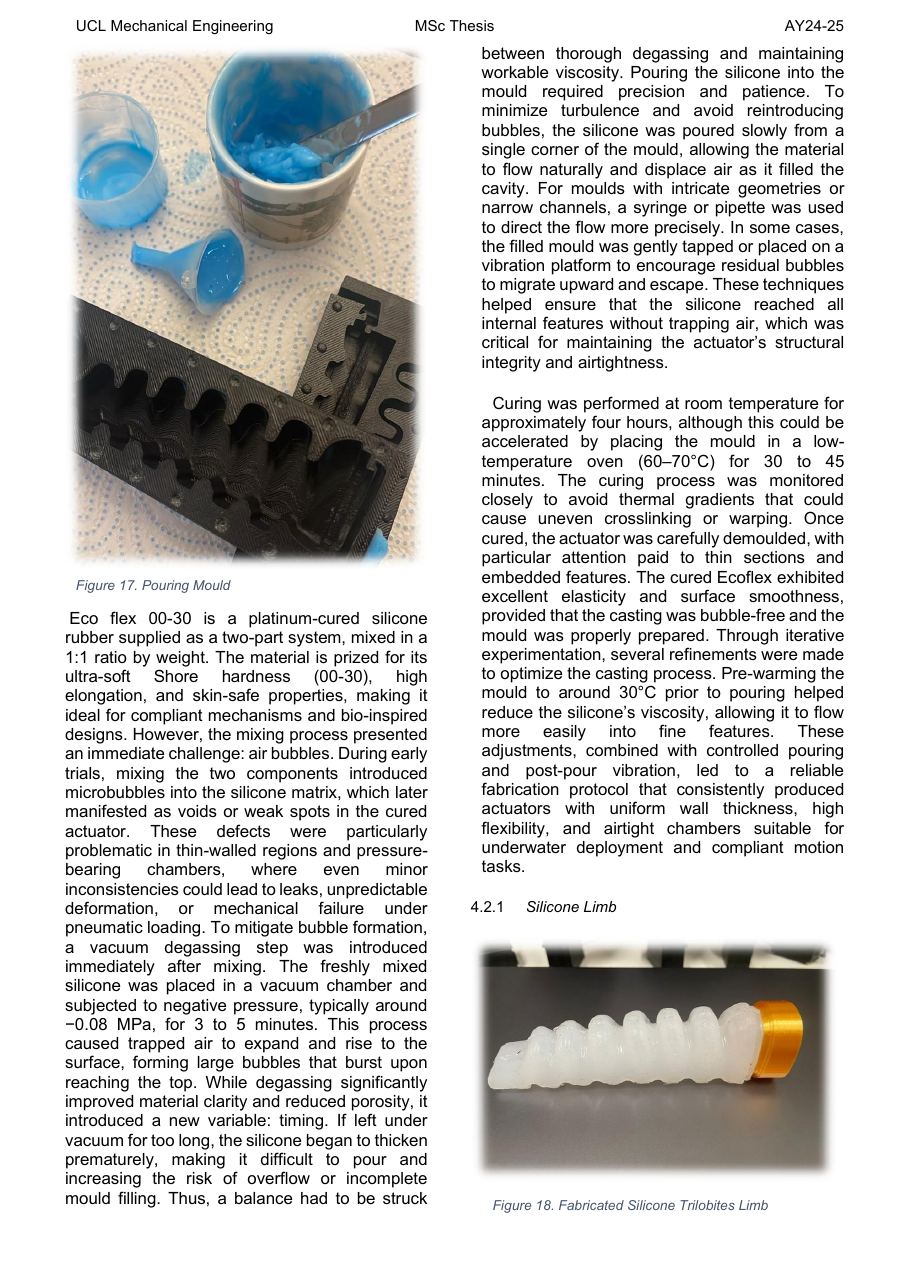
The cast silicone limbs lined up on the bench with their servos
FIG. 04 — CAST SILICONE LIMBS

01

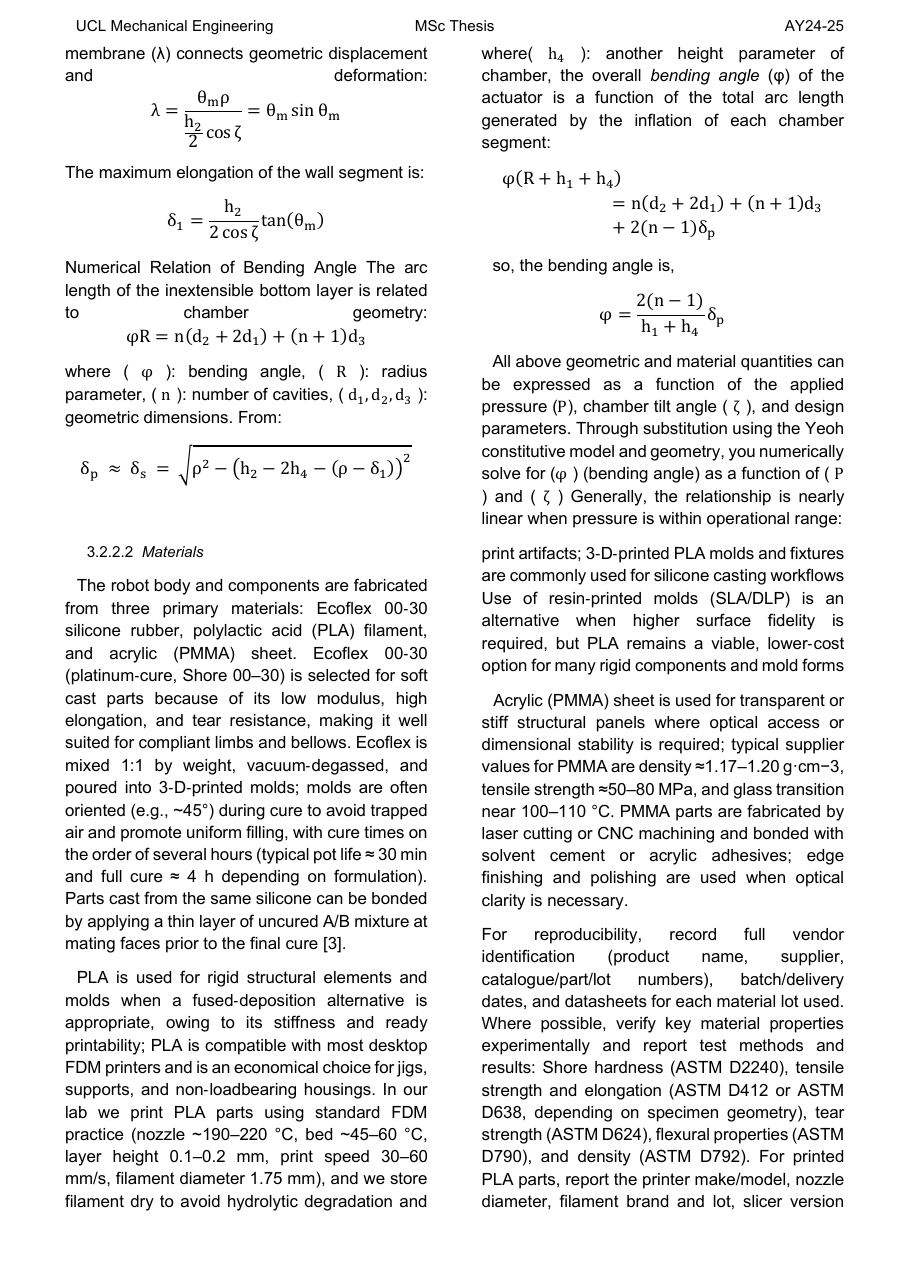
The abstract, simply

Coral reefs are some of the richest — and most threatened — places on Earth, so we need to keep a close eye on them. Human divers can only go so far, it’s risky, and they can disturb what they’re studying. Most underwater robots are rigid boxes with propellers: clumsy around something as fragile as coral.

Sea animals solve this by being soft. This project builds a robot the same way: limbs made of silicone that move by being pumped full of fluid, so it can swim, crawl and gently grab — getting close to the reef without damaging it.

02

How it was done
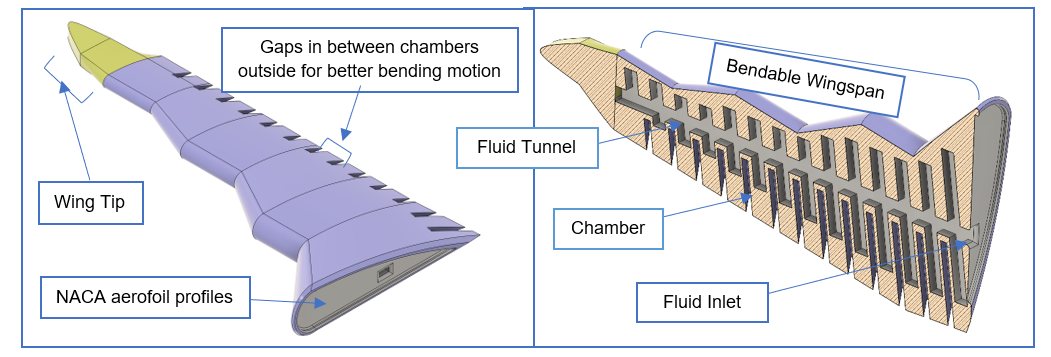
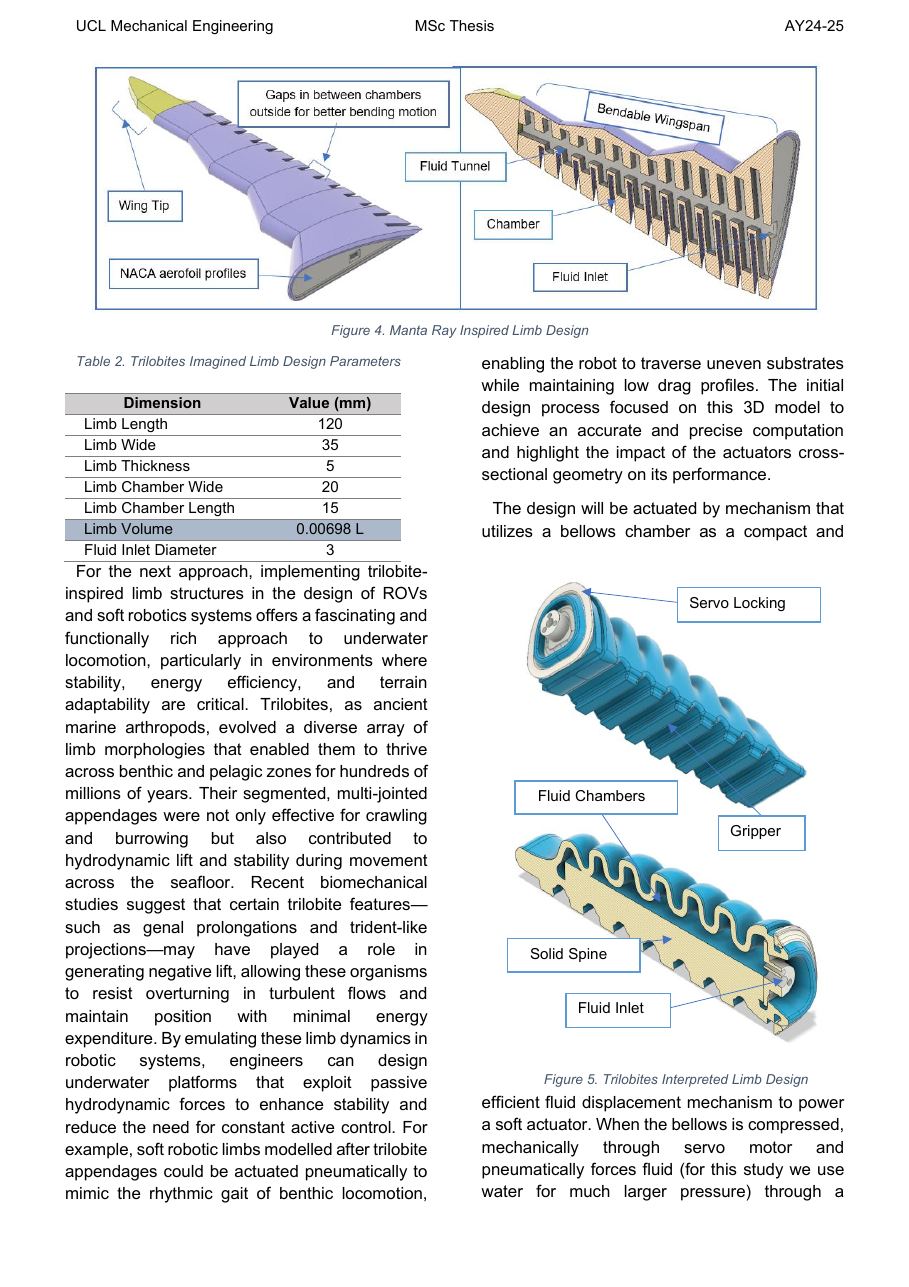
Manta-ray inspired wing limb with segmented chambers
Design A — Manta rayA gliding wingA fin shaped like an aerofoil (78 mm chord, 143 mm span) with a row of small air chambers, so it can flap and glide efficiently like a manta.
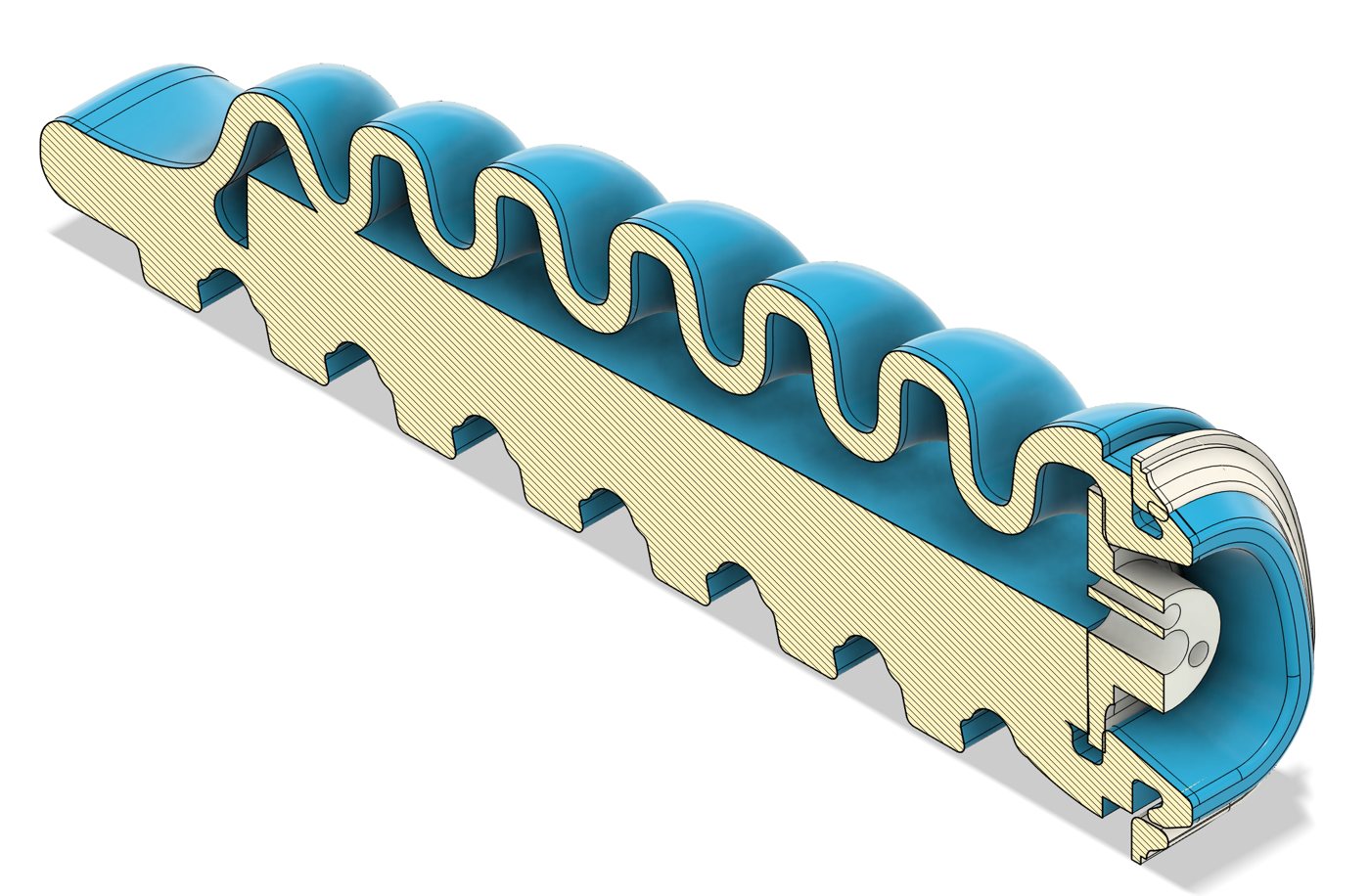
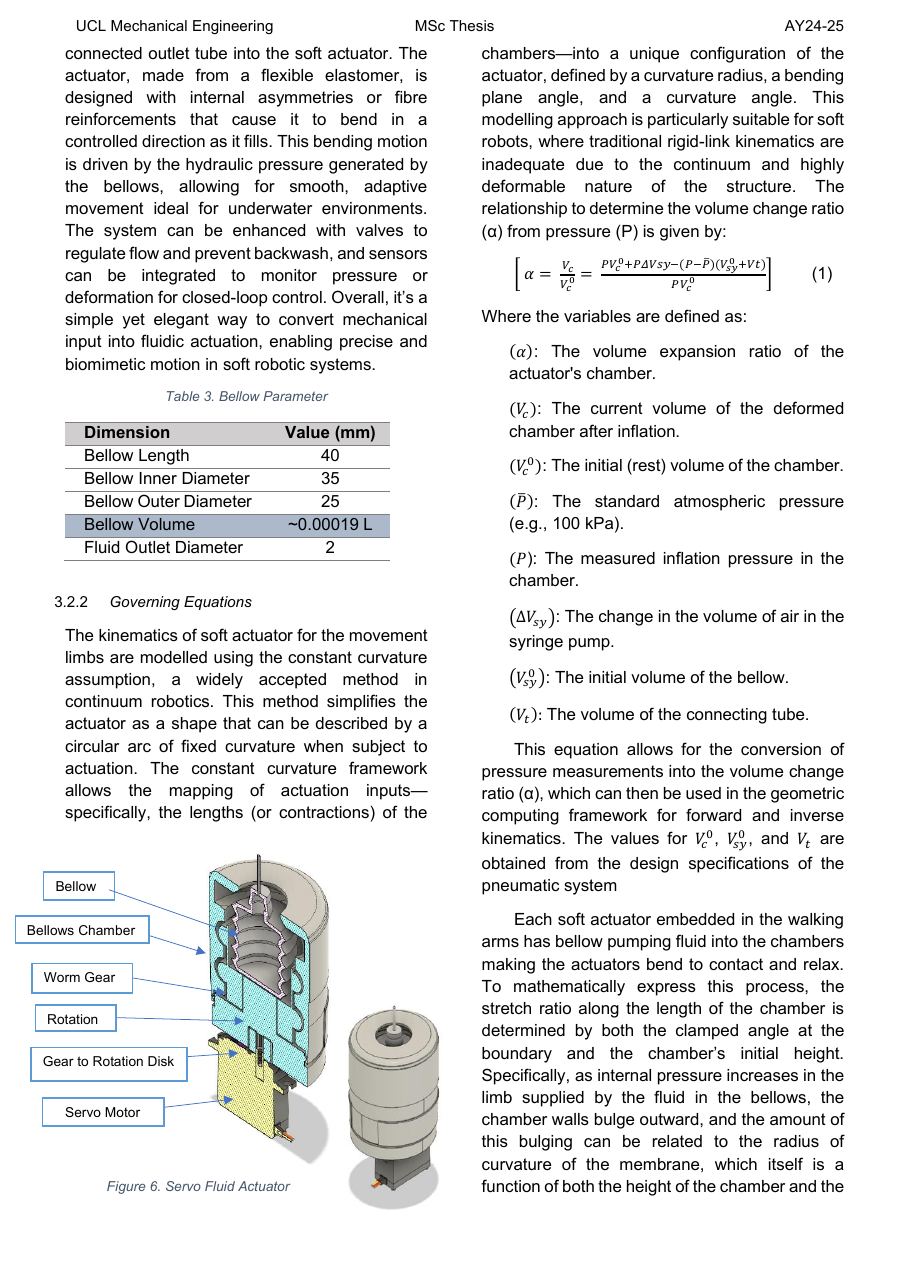
Cut-away render of the trilobite-inspired limb showing its internal chambers
Design B — TrilobiteA walking legA 120 mm segmented leg inspired by the ancient sea arthropod — built to crawl steadily over an uneven seabed without being flipped by currents.
  1. The muscle

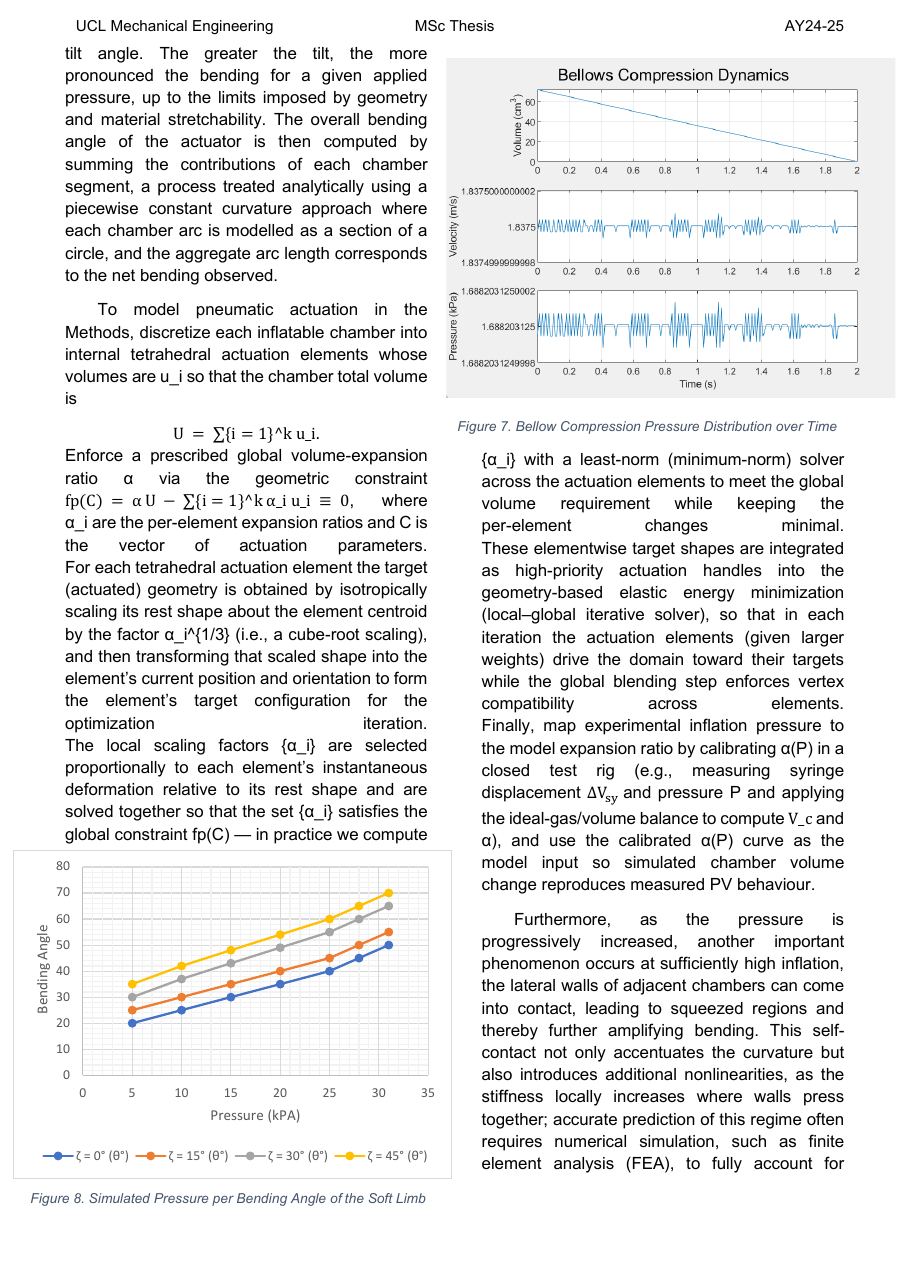
    A servo-driven bellows

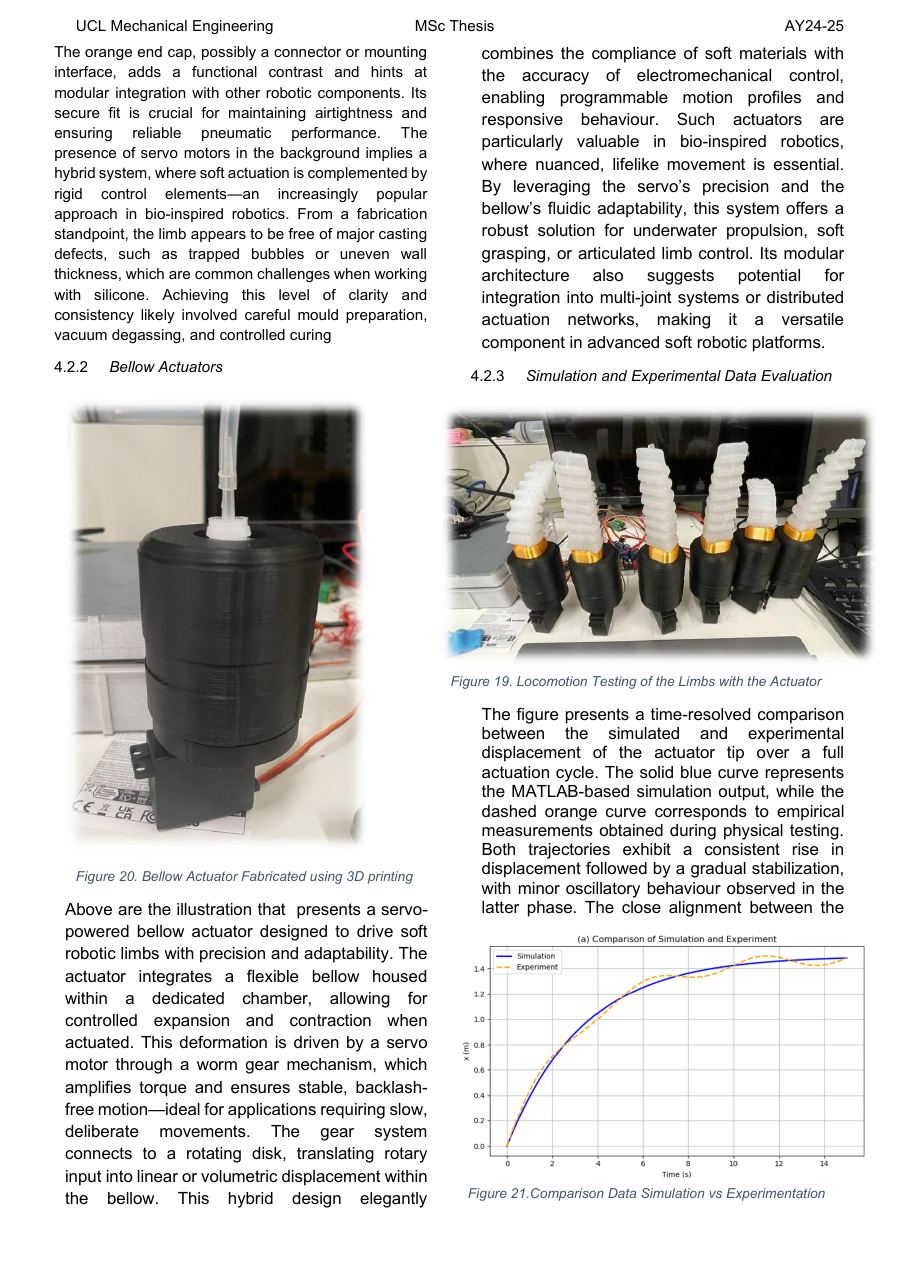
    A small motor turns a worm gear that squeezes a bellows, pushing water into the limb. Uneven walls inside make the limb curl one way as it fills.

  2. The maths

    Simulate before building

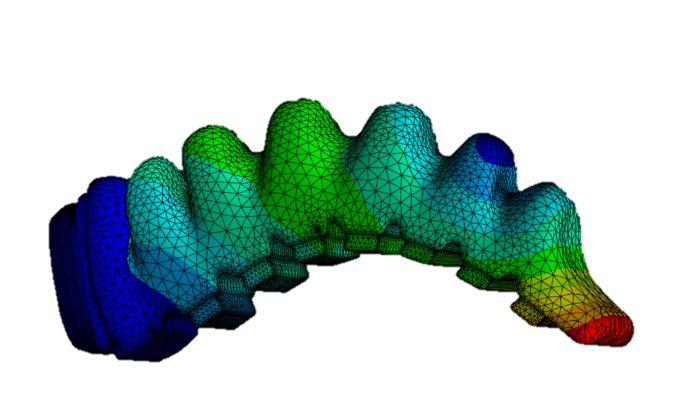
    Each limb was modelled as a smooth arc and simulated in ANSYS with a rubber-like (Yeoh hyperelastic) material model, to predict how far it bends at a given pressure.

  3. The build

    Cast in silicone

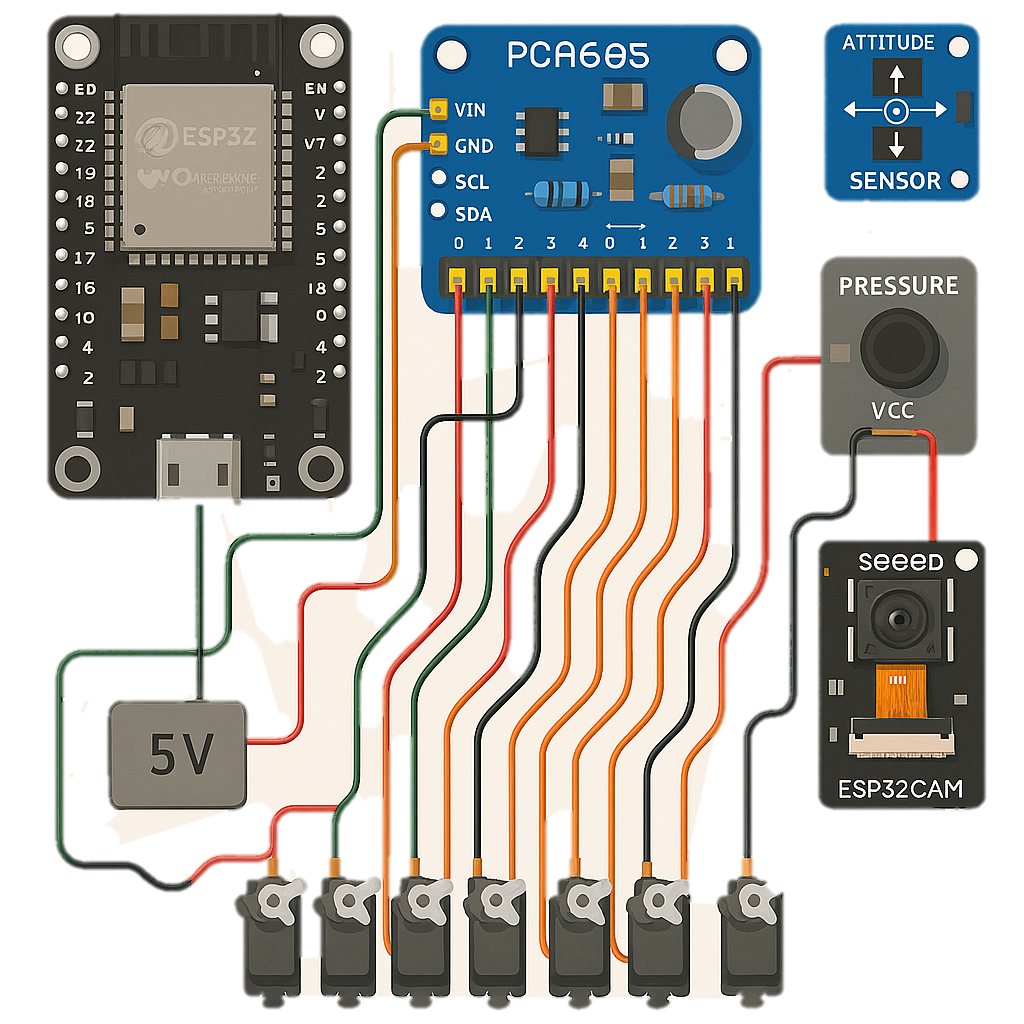
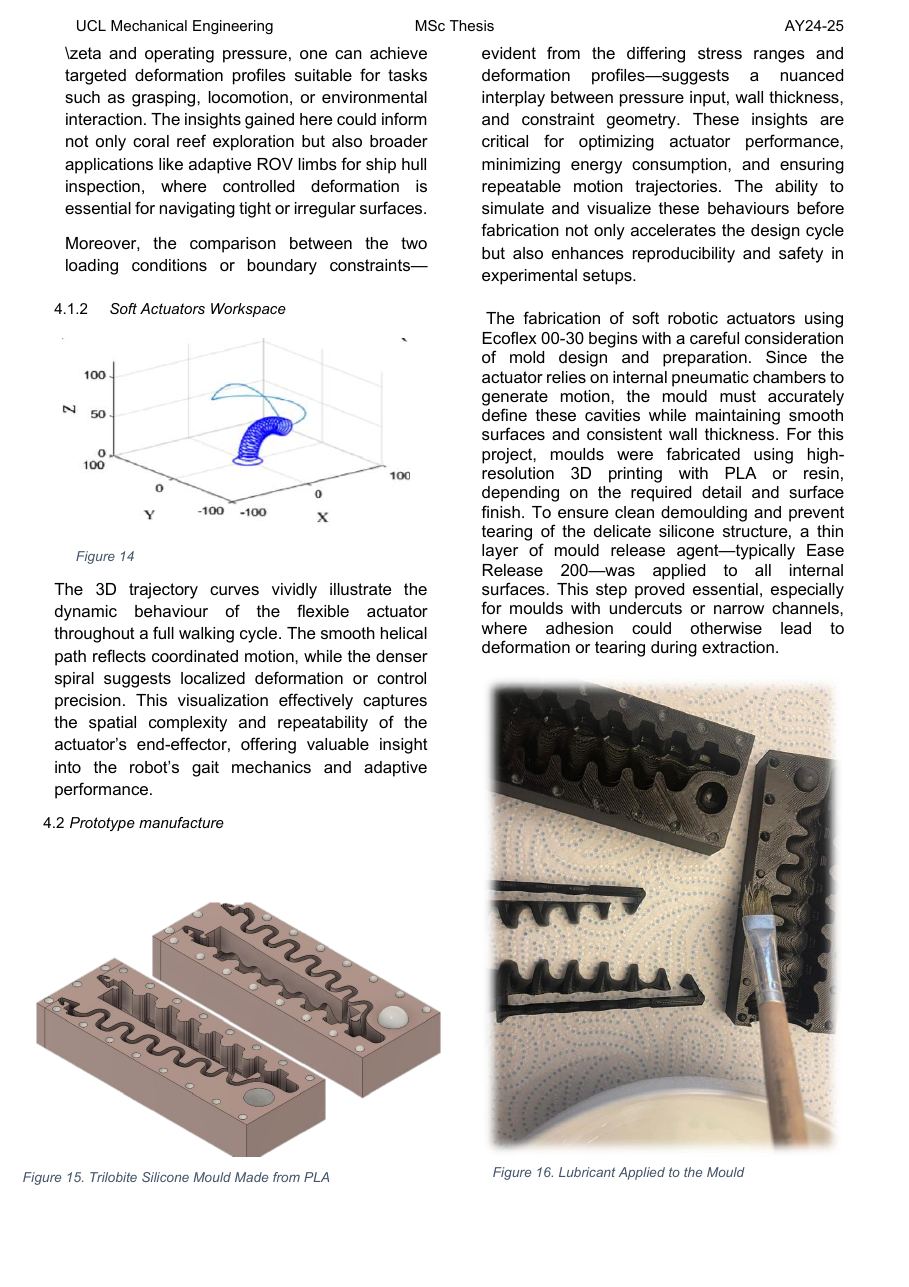
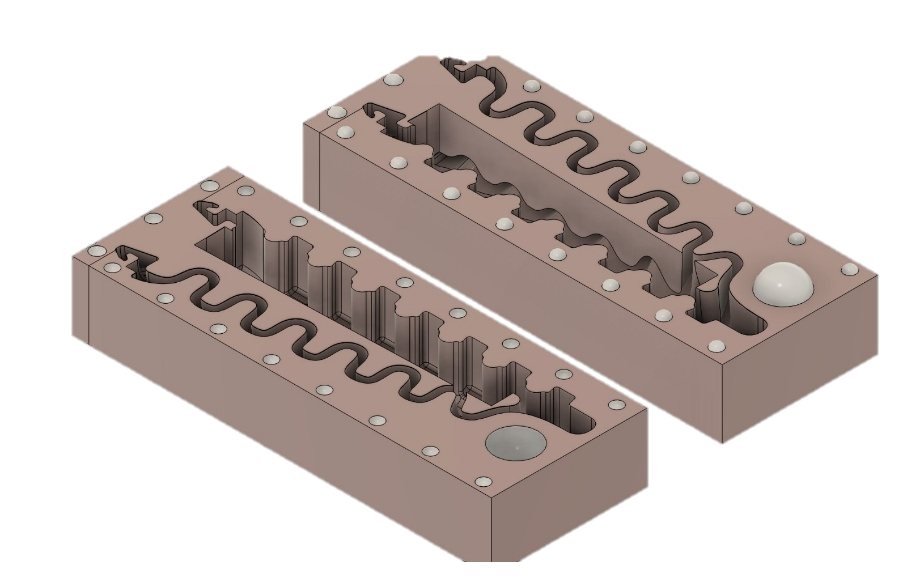
    Ecoflex silicone was poured into 3D-printed PLA moulds and vacuum-degassed to remove bubbles. An ESP32 board runs six servos, with pressure, tilt and camera sensors.
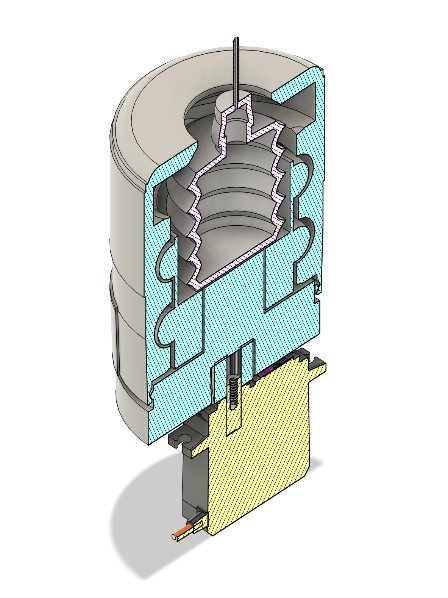
Cut-away render of the servo-driven bellows actuator
FIG. 05 — BELLOWS ACTUATOR
3D-printed two-part mould for the silicone limb
FIG. 06 — PRINTED MOULD
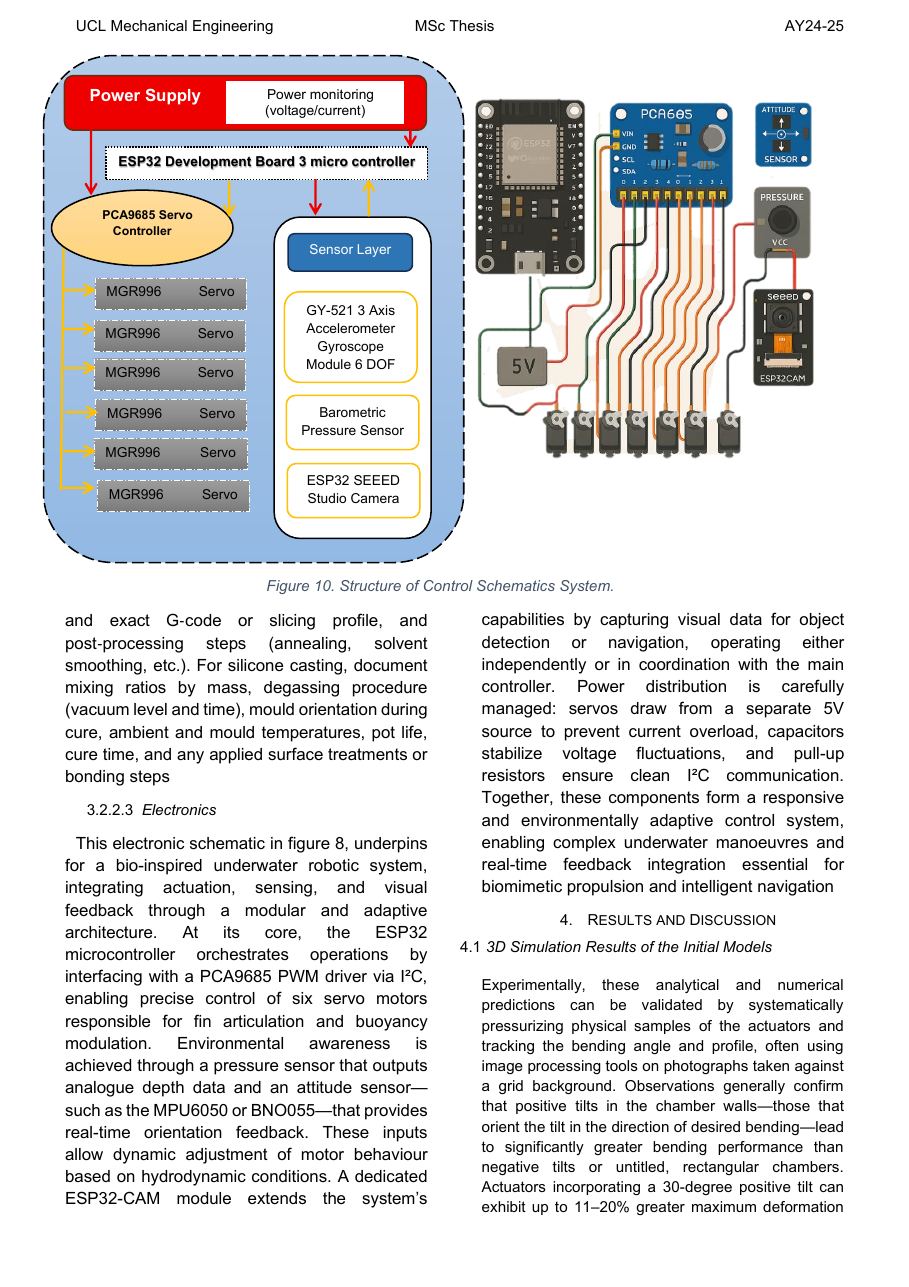
Wiring schematic: ESP32, PWM driver, sensors and servos
FIG. 07 — CONTROL ELECTRONICS

03

What happened

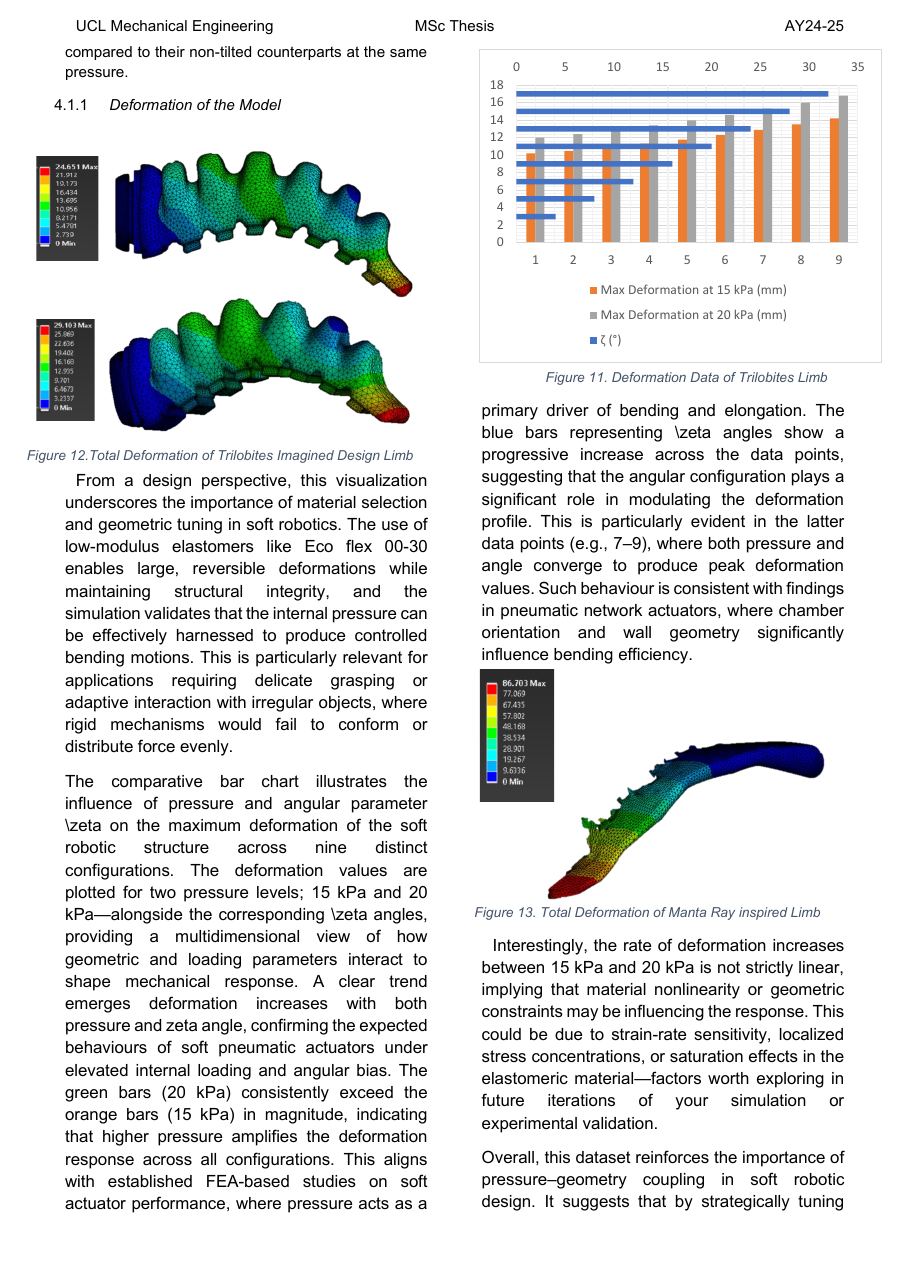
FEA result: the trilobite limb bending under pressure, coloured by deformation
FIG. 08 — SIMULATED BENDING (RED = MOST MOVEMENT)
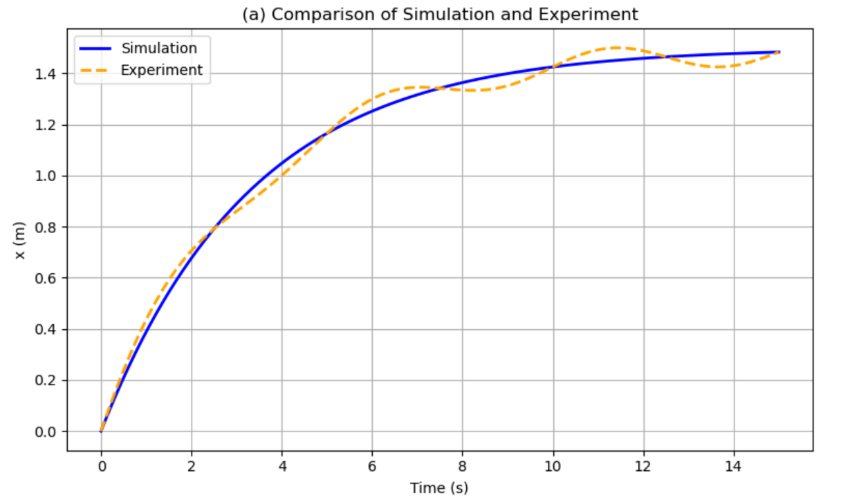
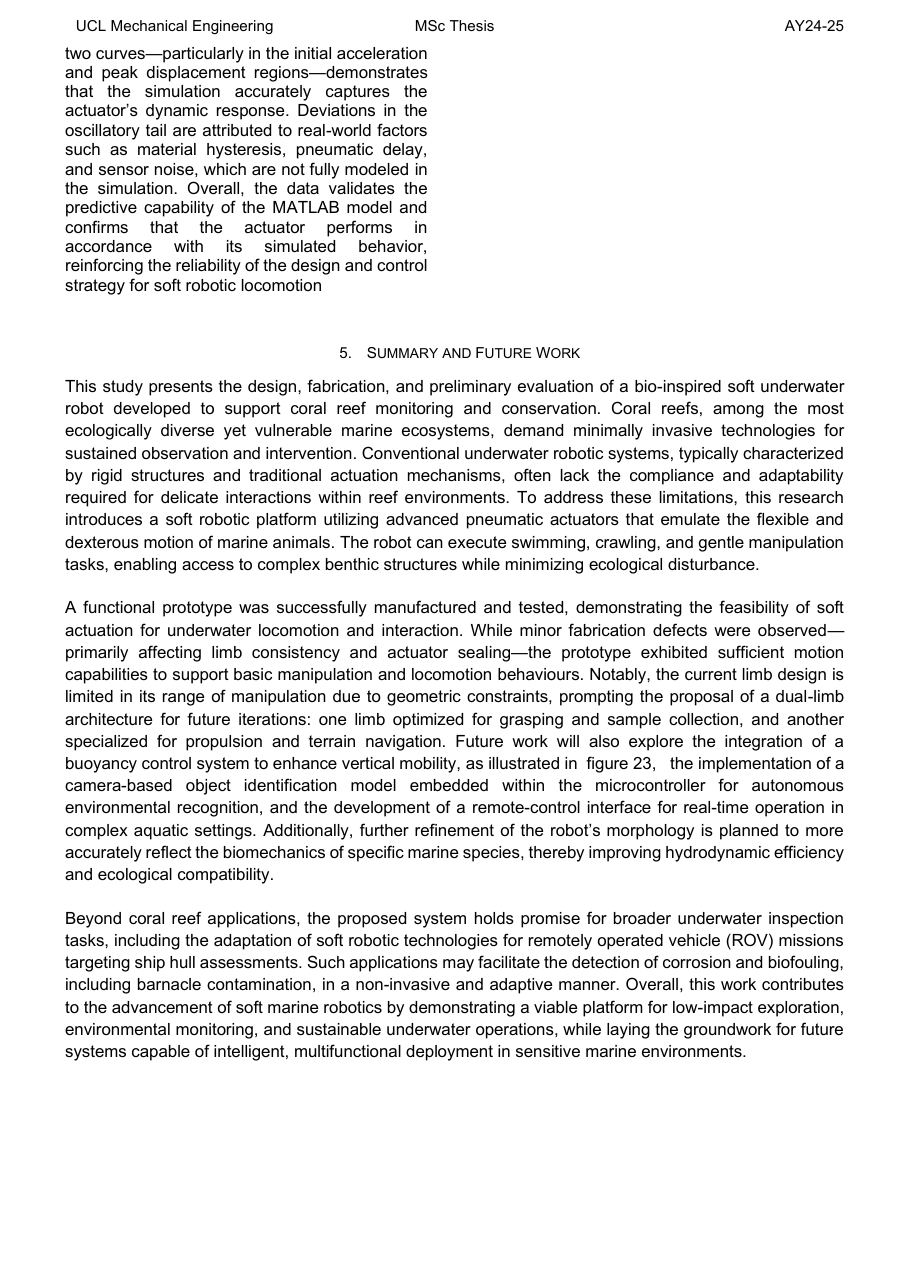
Chart comparing simulated and experimental actuator tip displacement over time
FIG. 09 — SIMULATION VS EXPERIMENT
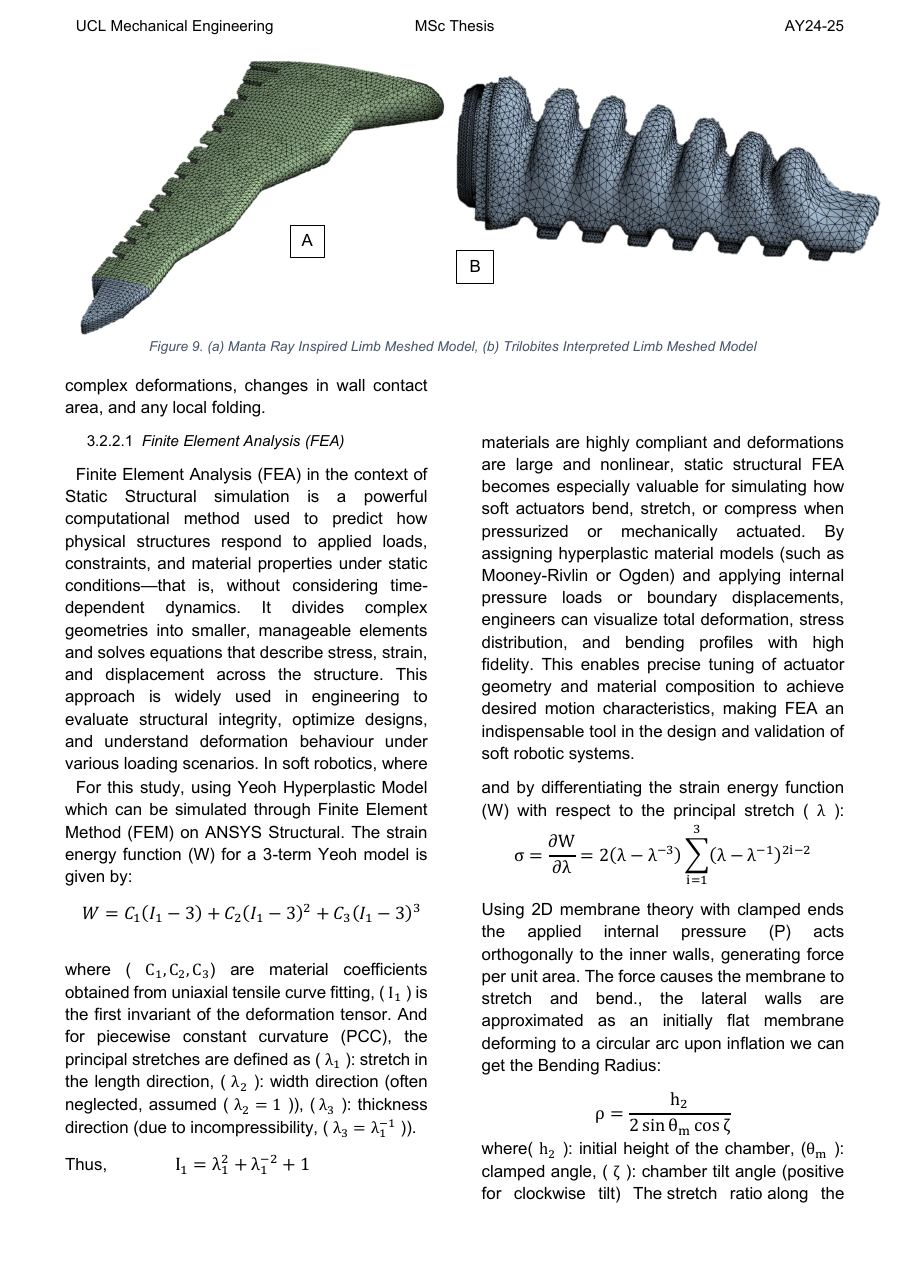
  • Angles matter. Tilting the chamber walls about 30° toward the bend gave 11–20% more movement for the same pressure.
  • More pressure, more bend — but not in a straight line. Going from 15 to 20 kPa increased bending unevenly, a sign of the rubber’s non-linear behaviour.
  • A smooth walking cycle. The limb tip traced a clean, repeatable path through each step.
  • Simulation matched reality. The MATLAB prediction closely tracked the measured tip movement; small wobbles came from real-world lag, stretch and sensor noise.
  • Getting the casting right. Vacuum degassing, warm moulds and slow pouring gave bubble-free, airtight limbs.

04

So what?

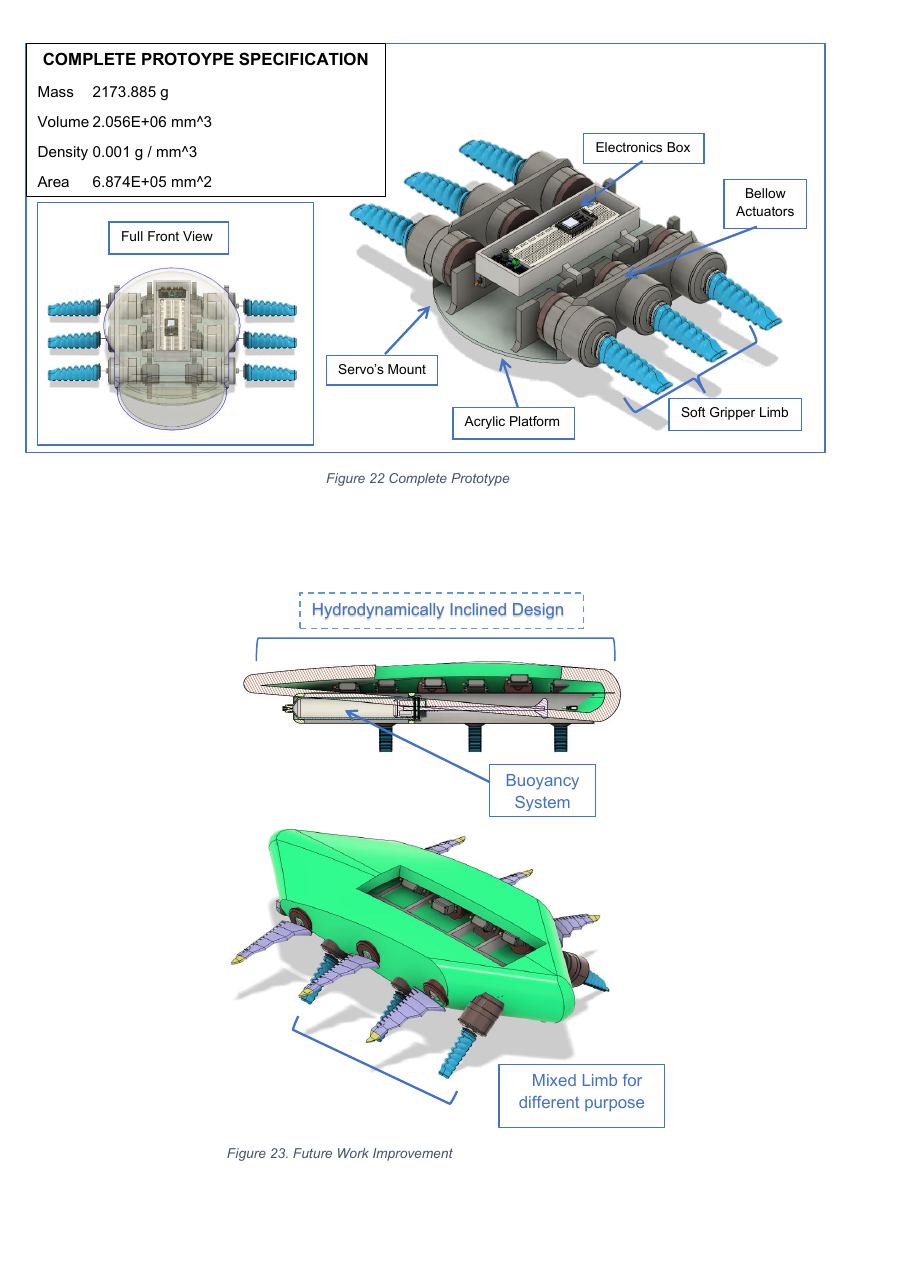
A working prototype was built and tested, showing soft, fluid-powered limbs really can move a robot underwater. There were small manufacturing flaws (sealing, limb consistency), and one limb design can’t do everything — so the next version splits the jobs.
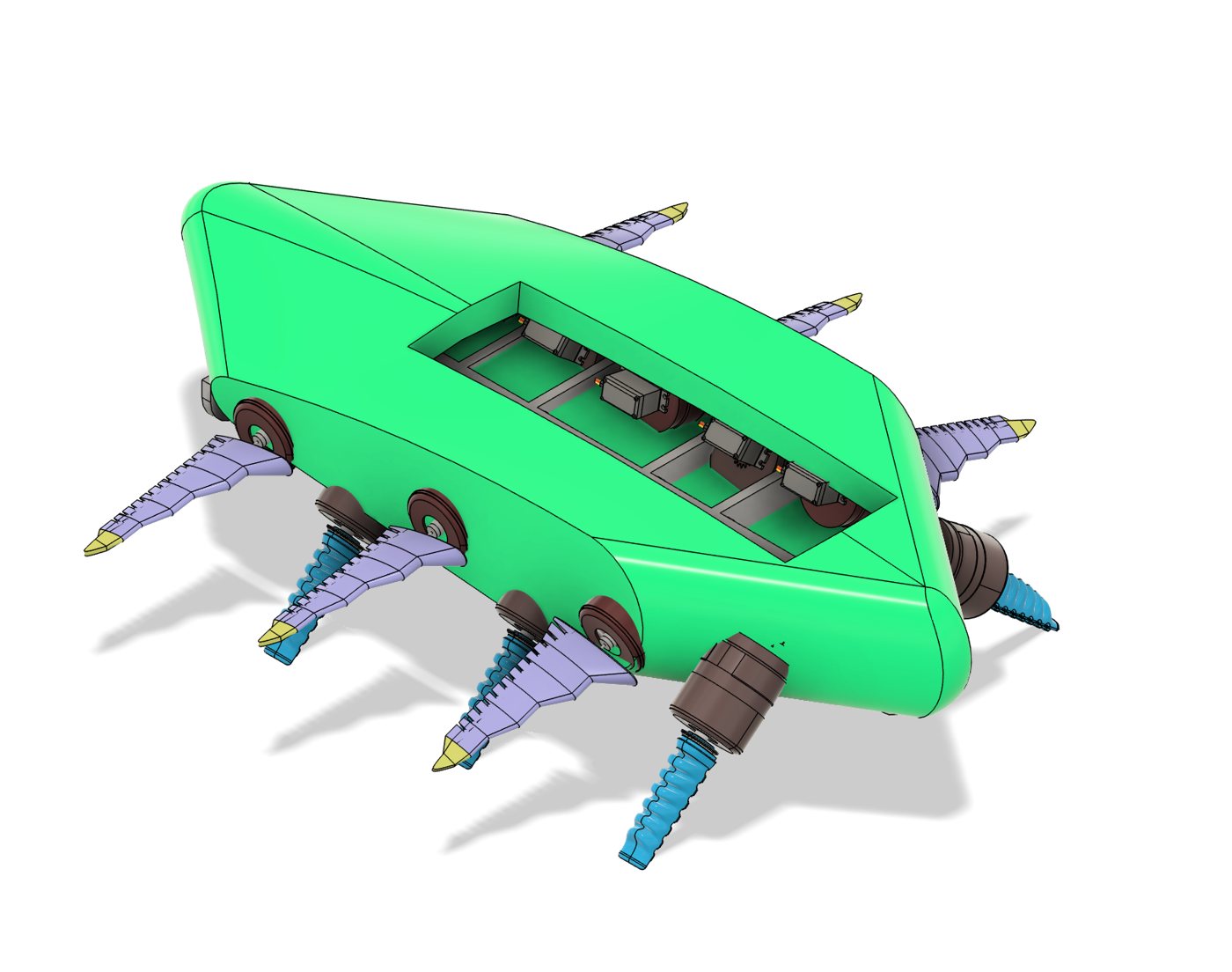
One limb to grab, one to swim A buoyancy system Onboard camera object detection Remote control Ship-hull inspection
Render of the proposed next-generation robot with a streamlined hull and mixed limbs
FIG. 10 — THE NEXT VERSION

05 — The full paper

Read it here
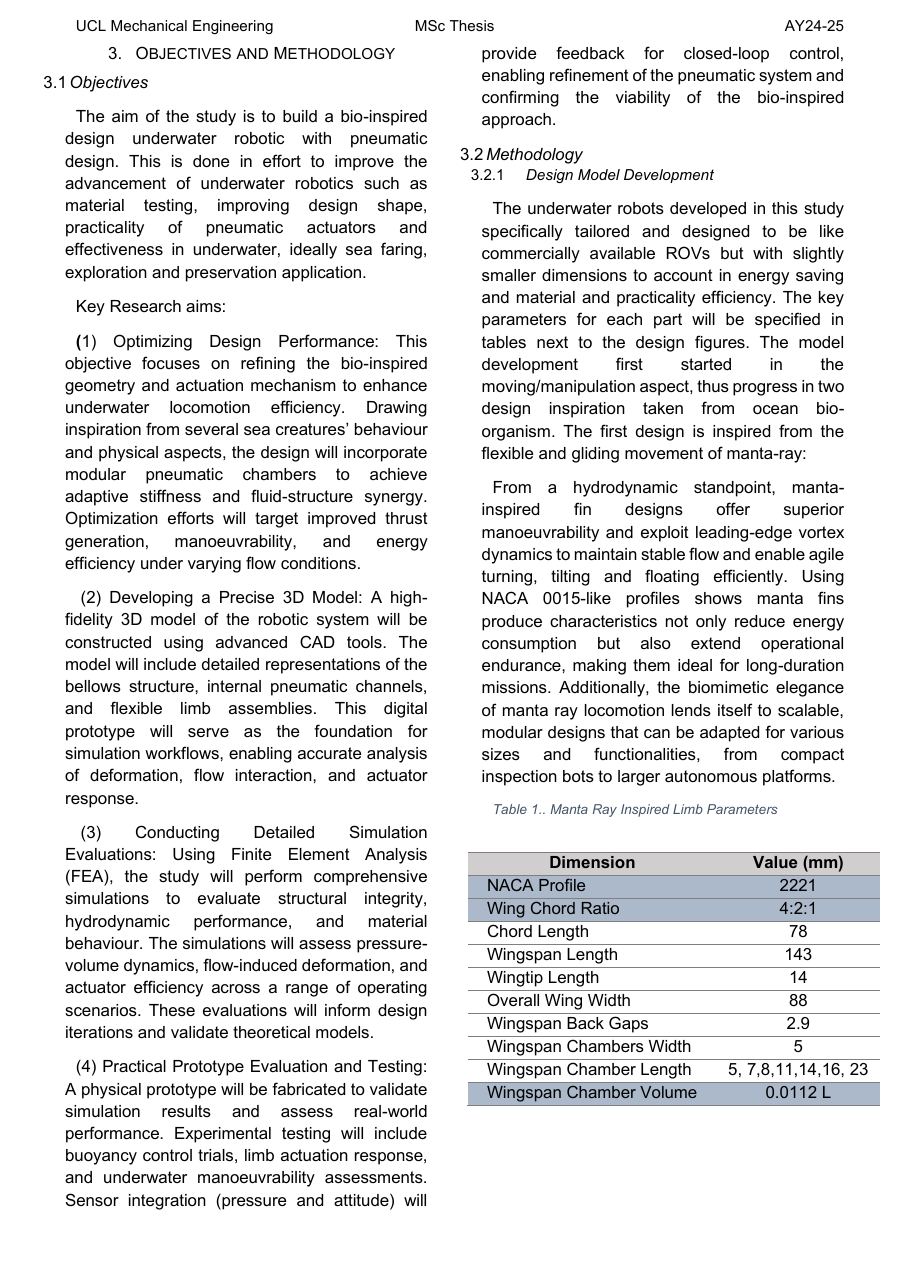
21 pages · scroll inside the frame

Download PDF ↓
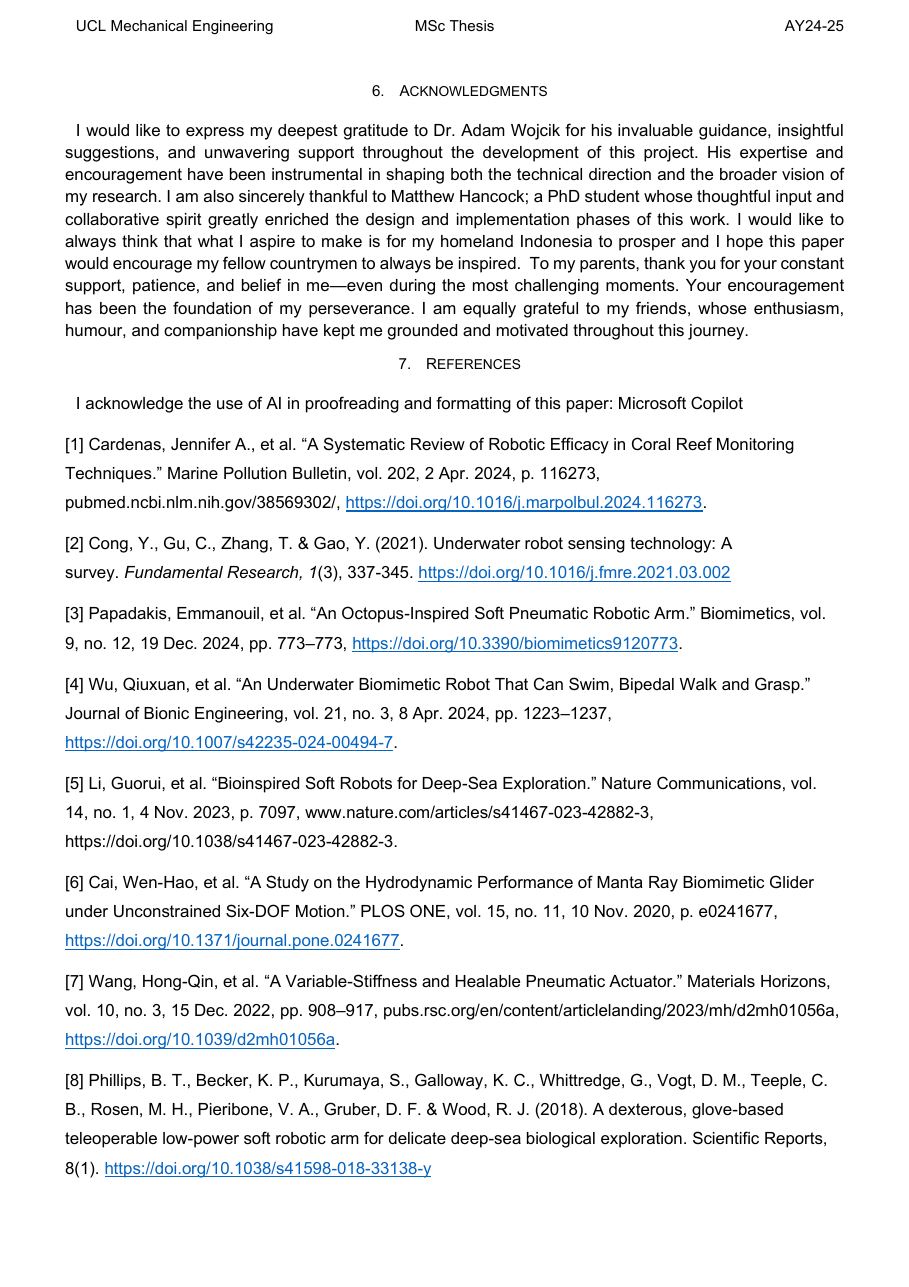
Thesis page 1 of 21 PAGE 1 / 21
Thesis page 2 of 21 PAGE 2 / 21
Thesis page 3 of 21 PAGE 3 / 21
Thesis page 4 of 21 PAGE 4 / 21
Thesis page 5 of 21 PAGE 5 / 21
Thesis page 6 of 21 PAGE 6 / 21
Thesis page 7 of 21 PAGE 7 / 21
Thesis page 8 of 21 PAGE 8 / 21
Thesis page 9 of 21 PAGE 9 / 21
Thesis page 10 of 21 PAGE 10 / 21
Thesis page 11 of 21 PAGE 11 / 21
Thesis page 12 of 21 PAGE 12 / 21
Thesis page 13 of 21 PAGE 13 / 21
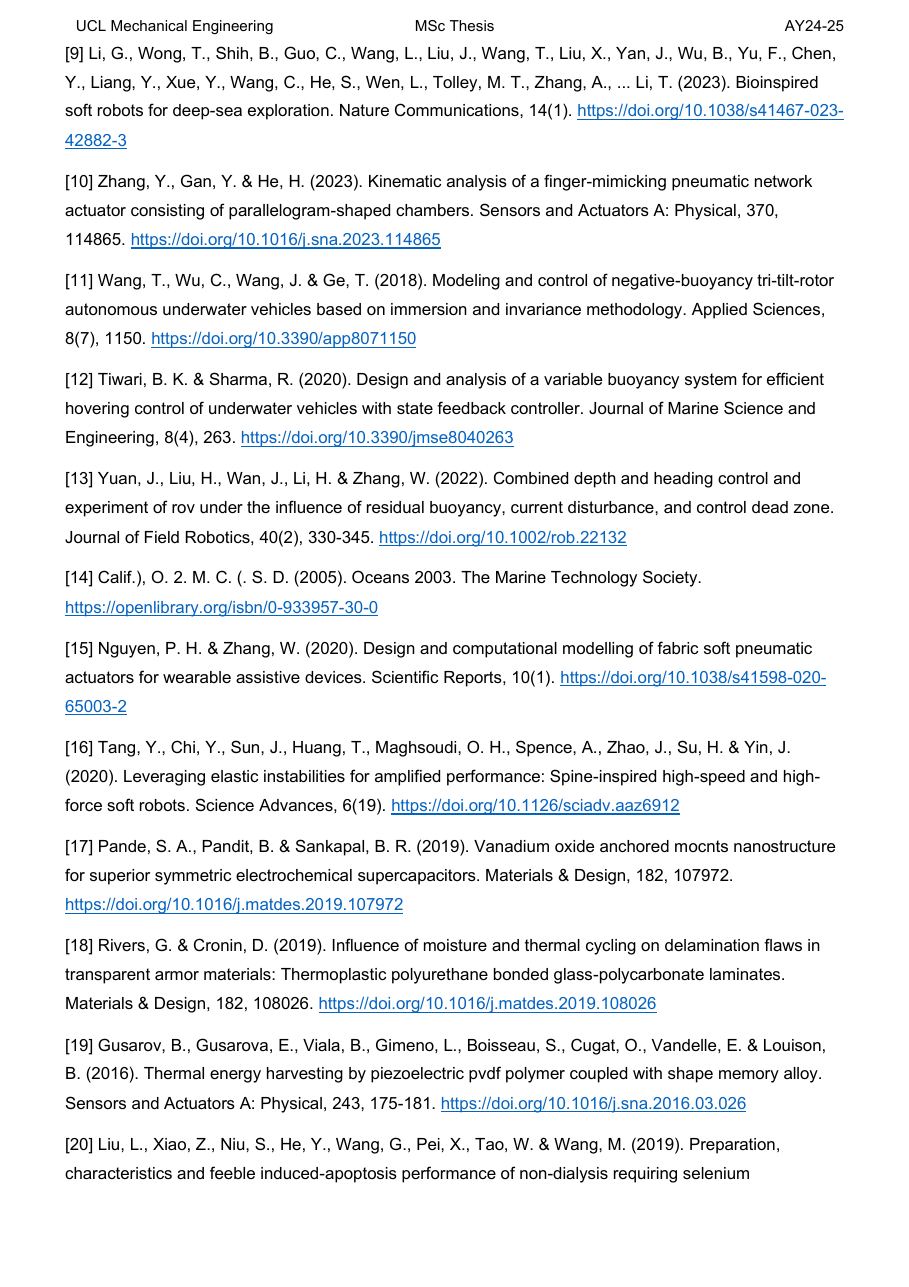
Thesis page 14 of 21 PAGE 14 / 21
Thesis page 15 of 21 PAGE 15 / 21
Thesis page 16 of 21 PAGE 16 / 21
Thesis page 17 of 21 PAGE 17 / 21
Thesis page 18 of 21 PAGE 18 / 21
Thesis page 19 of 21 PAGE 19 / 21
Thesis page 20 of 21 PAGE 20 / 21
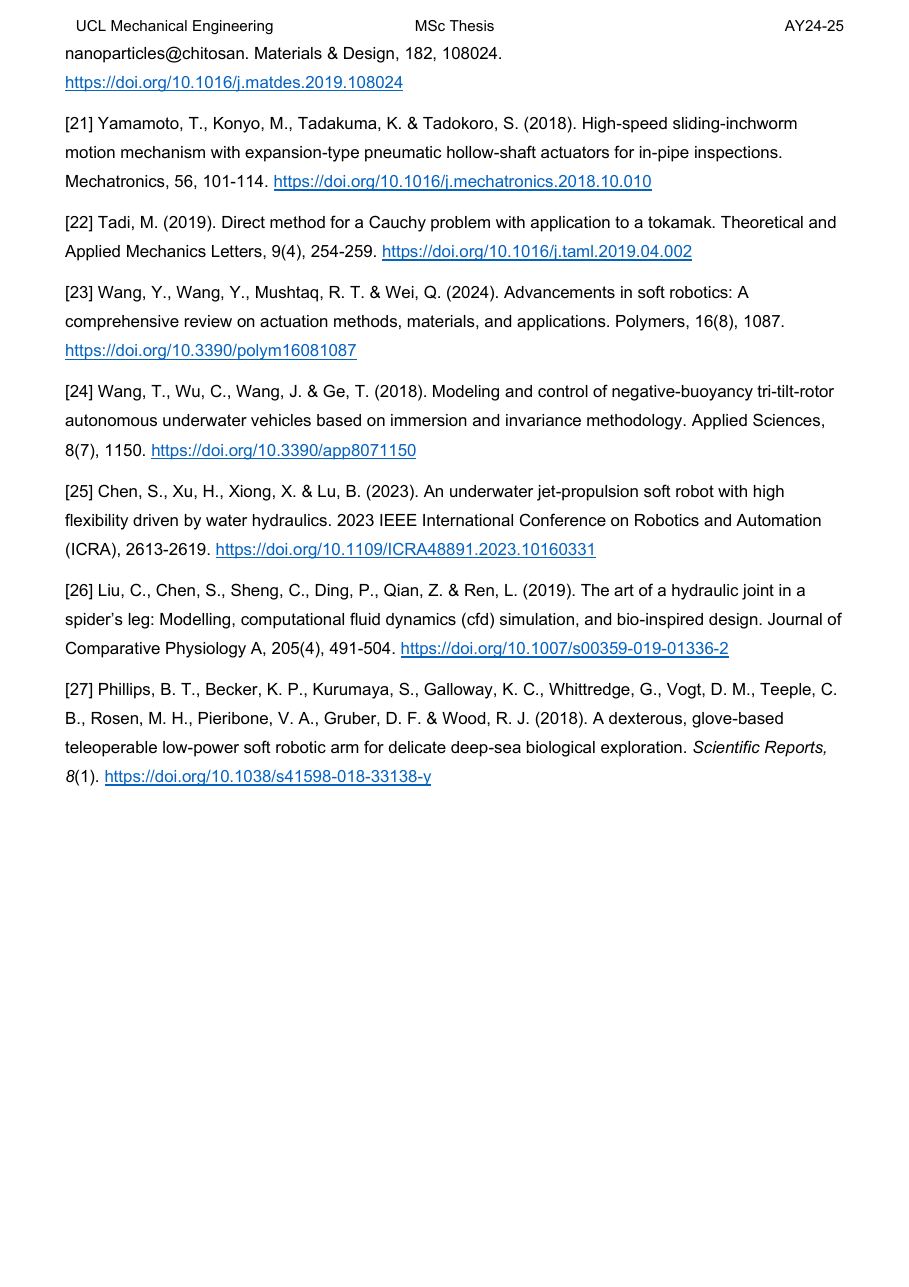
Thesis page 21 of 21 PAGE 21 / 21

Discussion

Comments

No comments yet

Register with your email to join the discussion

Your email is never shown publicly.

No comments yet. Be the first to share your thoughts.