Talk 10 — Review
Chrome and Consequences: The Science and Fiction of Cyberpunk’s Implants
In Night City, getting an upgrade is as normal as getting a haircut. You walk into a ripperdoc’s clinic, choose a new pair of eyes or a faster spine, and walk out a little less human. That idea, that the body is just hardware waiting for better parts, sits at the centre of Cyberpunk 2077 and of the anime Cyberpunk: Edgerunners.
With Edgerunners 2 landing on Netflix three days ago, this felt like the right month to step away from research papers and ask a different question: how much of Night City’s chrome could we actually build? I go through six implants from the game and the series, find the closest real technology for each, and look at two darker ideas the story keeps returning to: machines that think for themselves, and minds that crack under too much metal.
The year the game is set, in Night City, a megacity on the California coast.
People with a Neuralink brain implant by January 2026, in real clinical trials.
How much faster a real lab experiment made people react, using muscle stimulation.
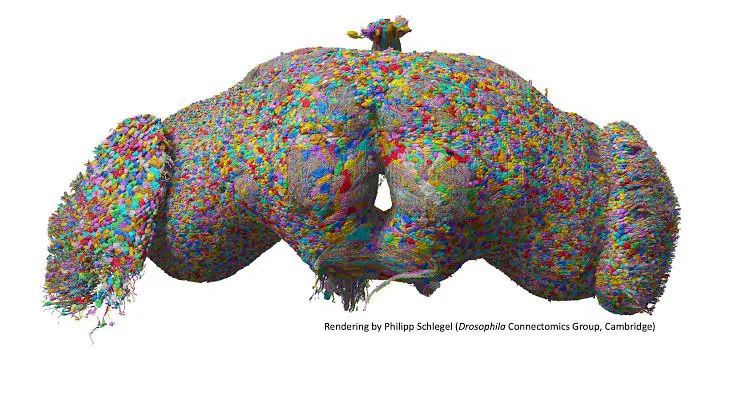
Neurons in a human brain. The first whole adult brain to be mapped, a fly’s, has 139,255.
I talk about the ending of Edgerunners (season 1) and the main twist of Cyberpunk 2077. Nothing from Edgerunners 2.



01
Upgrading the body, and the mind
Cyberpunk’s implants fall into two families. Some replace or improve the body: arms, legs, eyes, a reinforced skeleton. Others reach into the mind: chips that speed up your thinking, store data in your head, or hold a copy of someone else. In the story, both are sold like consumer electronics, with brands, upgrades and warranties.
Real research works almost entirely in the other direction. Nearly every implant that exists today is restorative: it gives back something a person lost, such as a hand, a leg or some sight. Enhancement, making a healthy body better than normal, is mostly limited to lab experiments, sport tech and a few hobbyists with magnets in their fingertips. That gap, between fixing and upgrading, runs through everything below.
Almost every milestone fixes something
- 1958
First implanted pacemaker. Stockholm, 8 October. The first device lasted hours; the patient lived decades on later models.
- 1984
First US-approved cochlear implant. The 3M/House single-channel device, for adults.
- 1997
Deep brain stimulation for tremor. Medtronic Activa; Parkinson’s disease followed in 2002.
- 2004
First BrainGate implant. A paralysed man moves a cursor by thought (Nature, 2006).
- 2013
First US retinal implant, Argus II. Later discontinued, leaving users without support.
- 2014
LUKE arm cleared. A DARPA-funded arm with several muscle-controlled grips.
- 2020
OPRA implant approved. An above-knee prosthesis anchored straight to the thigh bone.
- 2024
Neuralink’s first participant. January; 21 people by January 2026.
- 2024
MIT nerve-controlled ankle. More natural walking, top speeds 41% higher.
- 2025
PRIMA retinal chip results. 80% of 38 patients regain meaningful reading vision.
It is also personal for me. My BEng dissertation was a 3D-printed prosthetic hand that closes when you flex your forearm, and I later rebuilt the open-source InMoov hand as a hobby. Neither comes close to a cyberarm, but both taught me how much engineering it takes just to make five fingers do what you meant.
02
The chrome catalogue: fiction against today
Here are six implants from the game and the series, each set against the closest thing that exists in 2026. Tap a marker on the body, or a tab, to see what each implant does in Night City, its closest real counterpart, and how far that counterpart has got.
Sandevistan: reflexes on fast-forward
A spinal implant that speeds up your nervous system until the world seems to stop.
Muscle stimulation that starts your movement early: about 80 ms faster in a 2019 lab study.
Still fiction Slowing time down
Sandevistan: the reflex booster
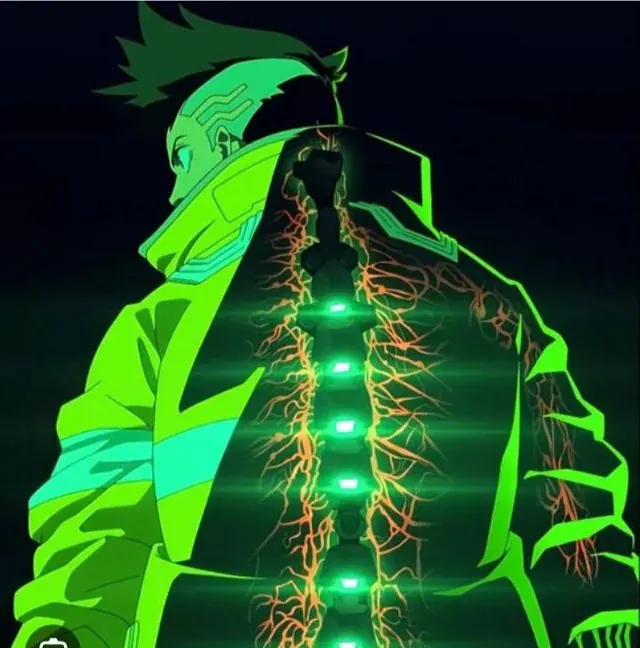
The Sandevistan is the implant that defines Edgerunners. Installed along the spine, it boosts the user’s nervous system so that everything around them seems to crawl. In the game it is an operating system for your body; in the anime it is the military-grade chrome David Martinez builds his life around.

Sandevastated
What happens to everyone who brings a normal reaction time to a Sandevistan fight.
A real human reaction is surprisingly slow. Light has to be turned into nerve signals in the eye, the brain has to recognise what it saw and decide, and the command has to travel down nerves to a muscle that then needs time to tense. In a lab, pressing a button when a light comes on takes most people around a quarter of a second.
No technology speeds up thought itself, but one clever experiment skips part of the queue. Shunichi Kasahara, Jun Nishida and Pedro Lopes used electrical muscle stimulation to fire the arm’s muscles 160 ms after a target appeared, before most people would have moved on their own. In their first study, participants reacted about 80 ms faster, and most still felt the movement was their own. Fire the stimulation much earlier and the gain grows, but people start to feel that the machine moved them.

The real version is far less cinematic. Here is what that 80 ms head start looks like, slowed down ten times.
Get ready
Both lanes wait for the same light. Only one has a machine ready to help.
Arms and hands: Gorilla Arms and Mantis Blades
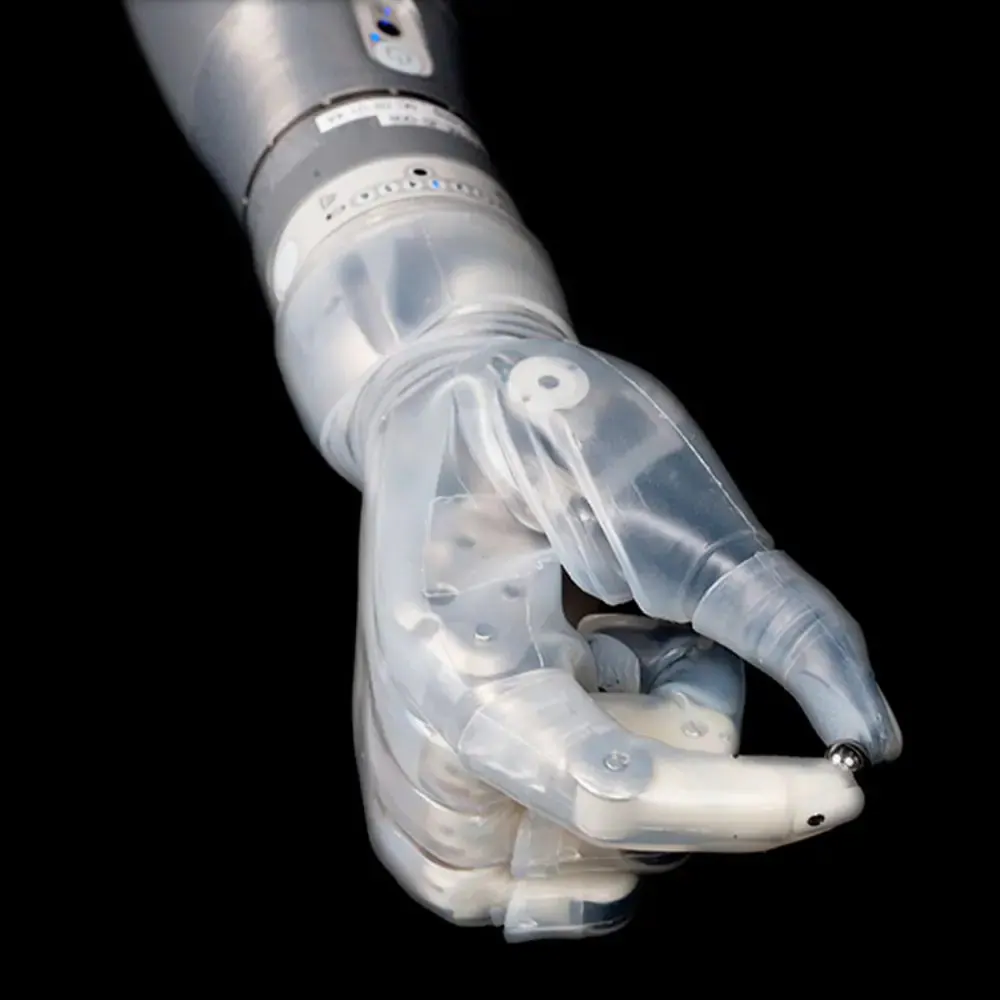
Night City sells arms that punch through car doors and forearms that unfold into blades. Real prosthetic arms are far more modest, but they are no longer just hooks. Myoelectric hands read the electrical signals of the muscles left in the arm, the DEKA “LUKE” arm was cleared in the US in 2014, and bone-anchored implants let a prosthesis attach straight to the skeleton. The hard part isn’t strength, which a motor can supply easily. It is control and feeling: getting many fingers to do what you intend, and getting touch to flow back to the brain.

Legs: Reinforced Tendons and Lynx Paws
In the game, leg chrome gives you a double jump and silent footsteps. The real headline is quieter but remarkable. In 2024 an MIT team led by Hugh Herr reported a bionic leg controlled directly by the nervous system. Surgeons reconnected pairs of muscles in the residual limb so they still pull against each other, which lets the brain sense where the artificial ankle is. Seven people with these connections walked with a more natural gait and reached top walking speeds 41% higher than a matched group without them. Not a double jump, but a body that treats the machine as its own.
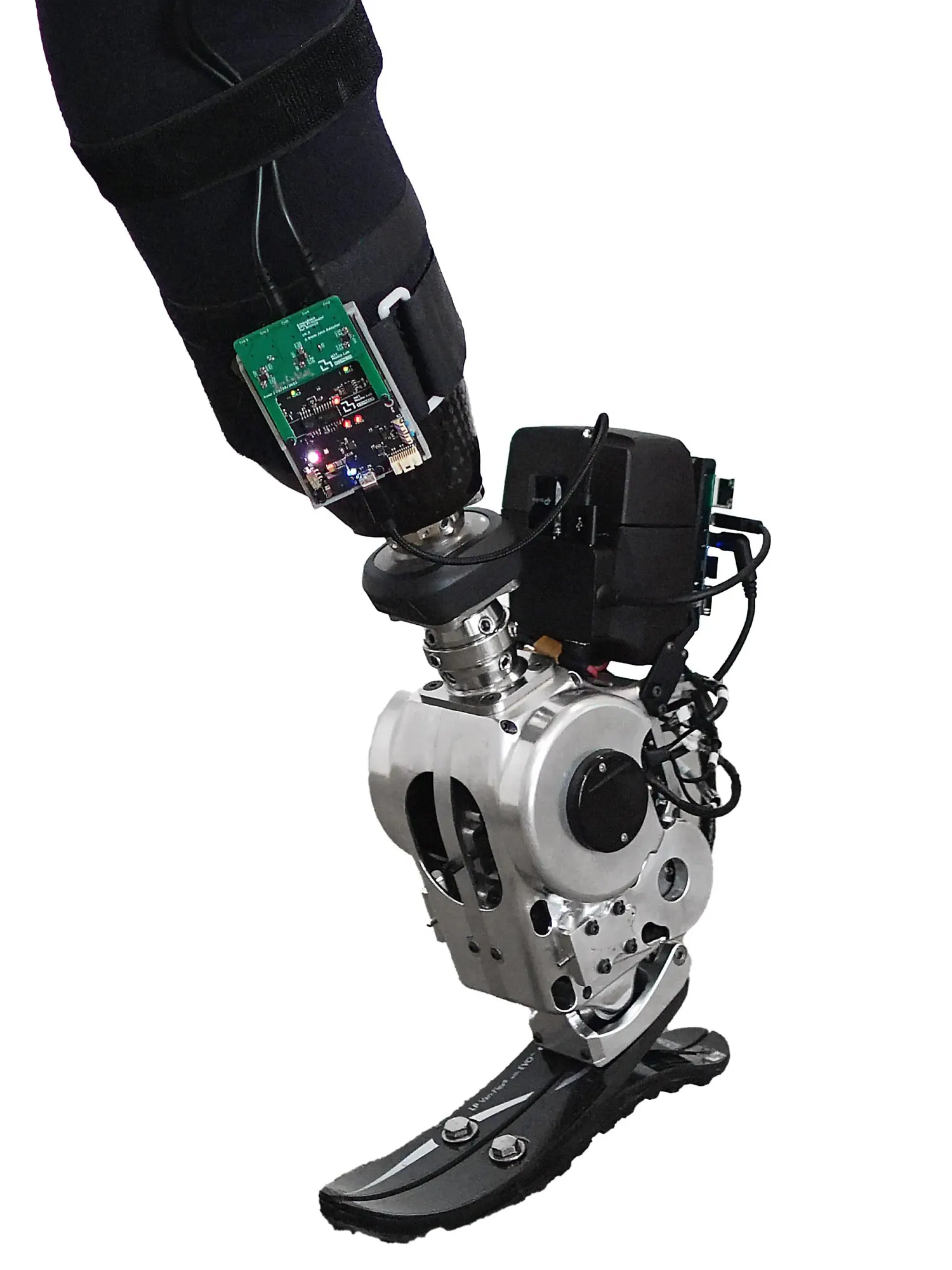
In 2026
A powered bionic ankle, with the electronics that read the muscle signals strapped to the socket. No double jump, but every joint and wire is there to make walking feel natural again.
Optics: Kiroshi eyes
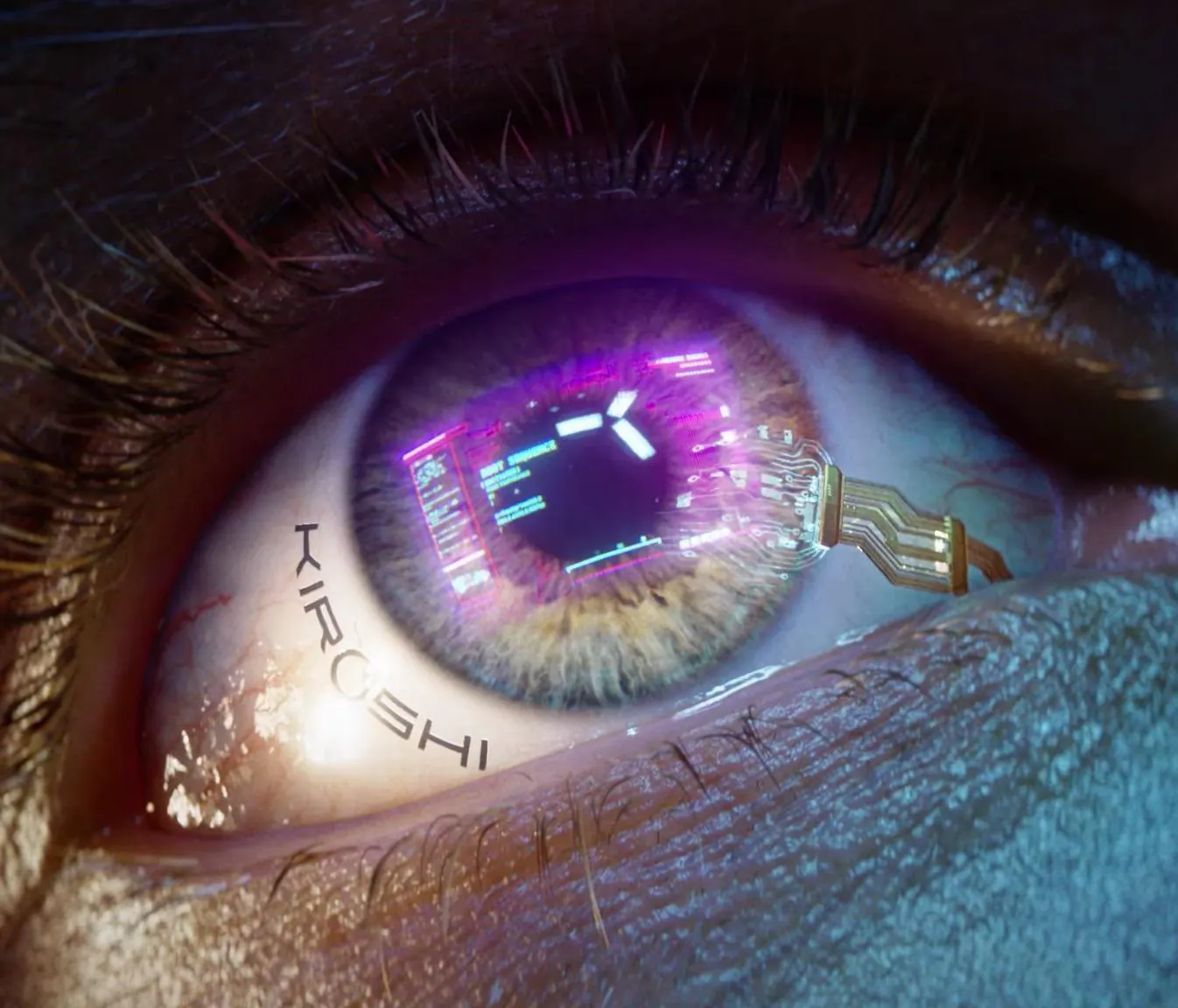
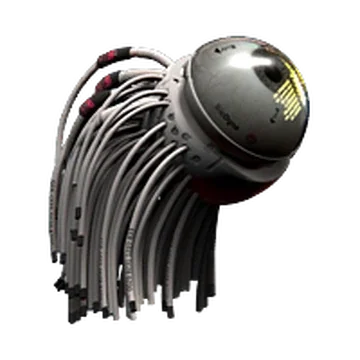
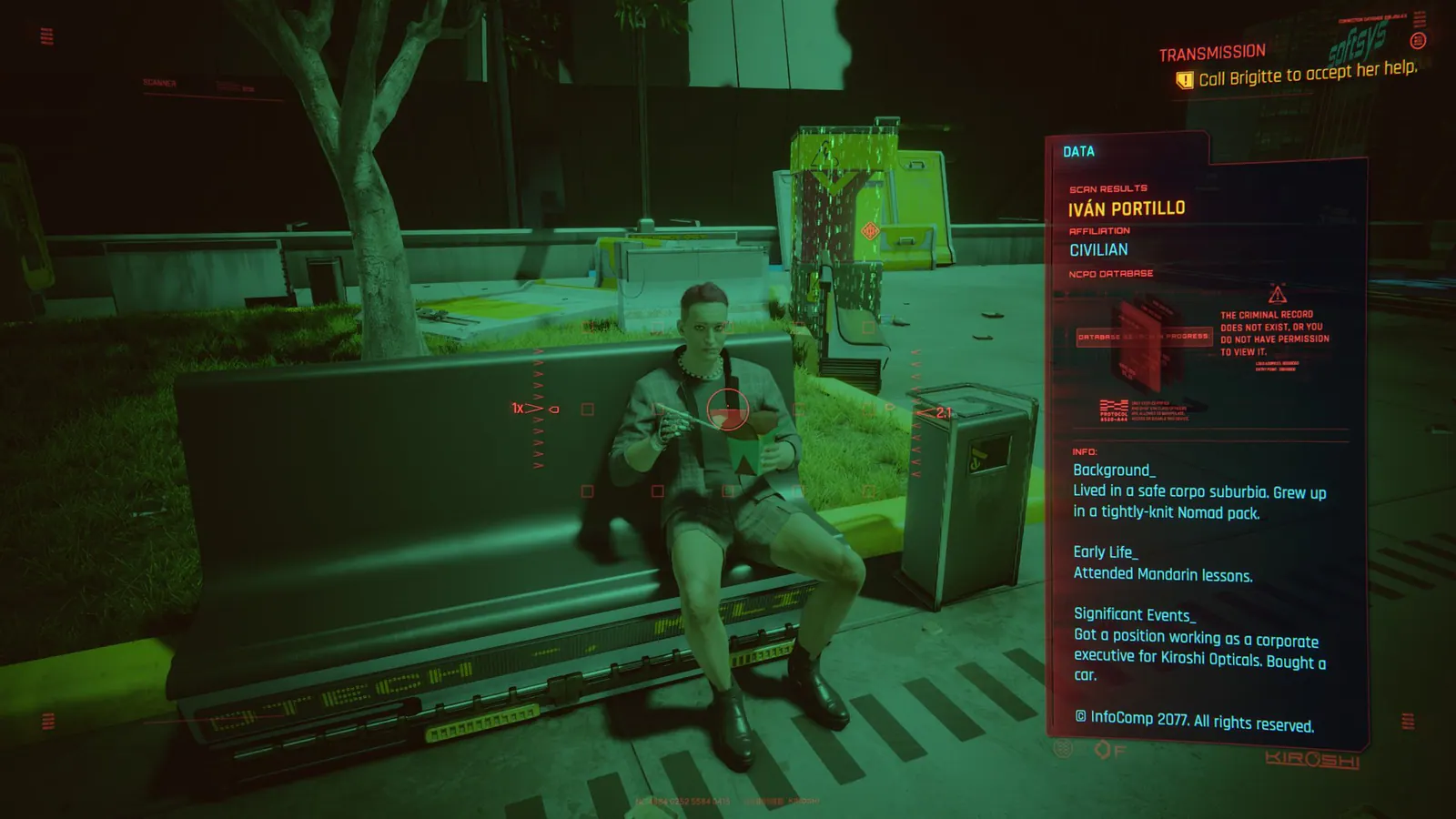
Kiroshi optics zoom, scan people for data and overlay a heads-up display on the world. Real implants are still fighting to restore basic sight. The PRIMA chip from Science Corporation is just 2 × 2 mm and sits under the retina, turning infrared light from a camera in a pair of glasses into signals for the remaining retinal cells. In a trial reported in the New England Journal of Medicine in October 2025, 38 people with age-related macular degeneration took part, and 80% of them gained clinically meaningful reading vision, on average 25 more letters on an eye chart. It has a CE mark in Europe. The images are grainy and black and white, and nobody is zooming, but people who couldn’t read are reading again.
Biochips: a computer in your head
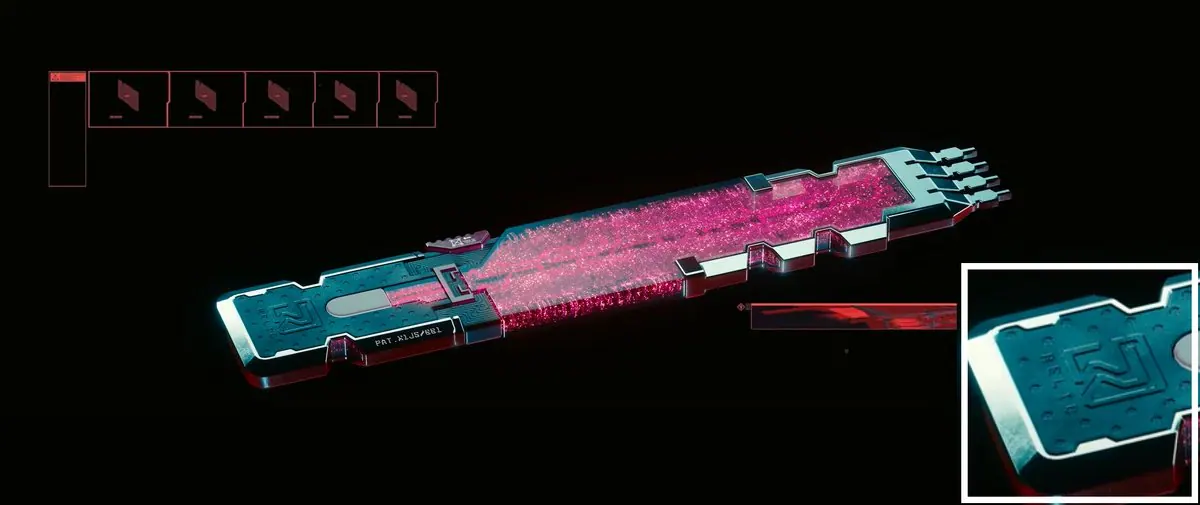
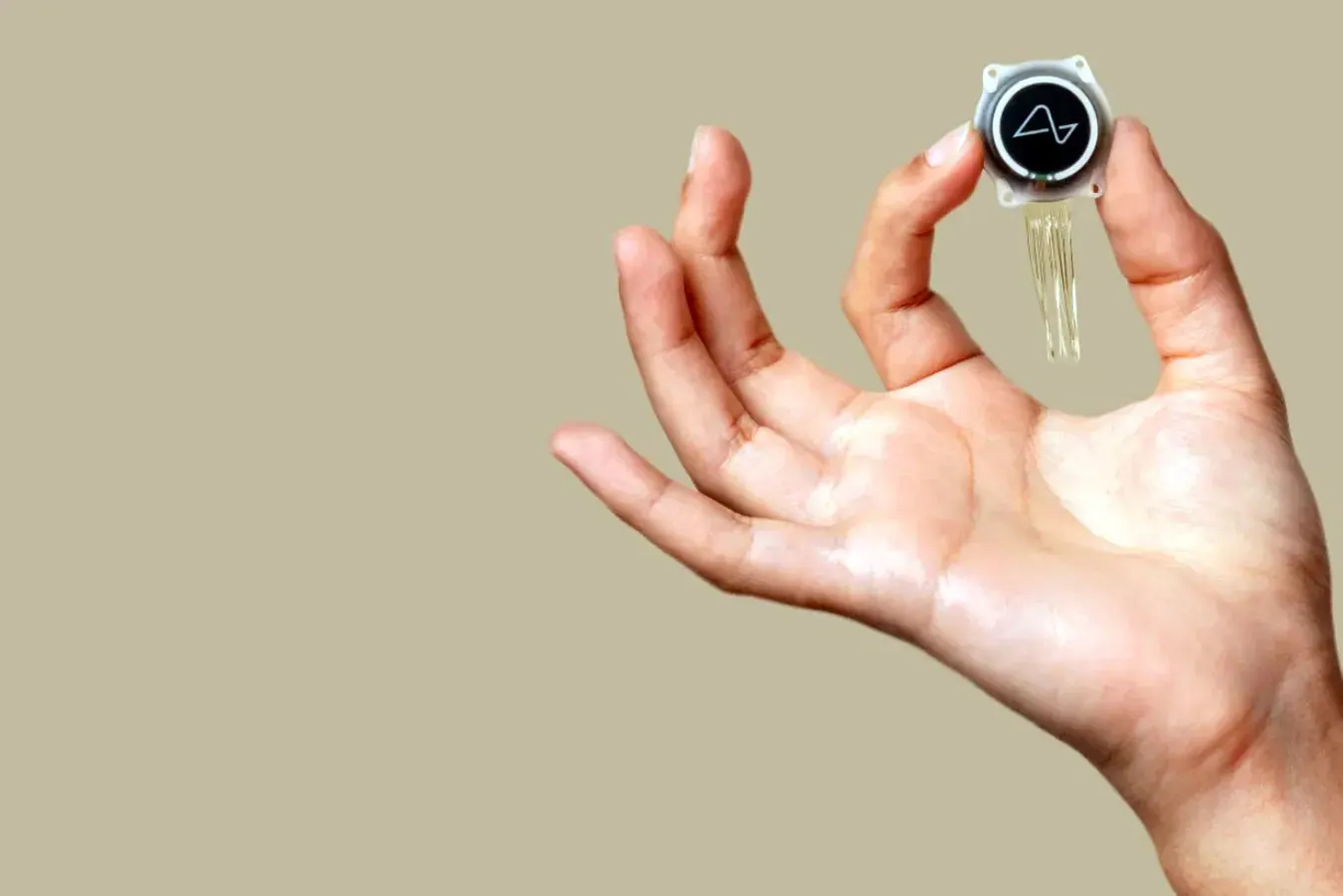
The Relic is the chip at the heart of Cyberpunk 2077: an Arasaka biochip that can hold a human mind, slotted into the back of your neck. The real counterpart is the brain–computer interface. Neuralink had implanted 21 people in its trials by January 2026, letting people with paralysis move a cursor or type by thought, alongside devices from groups such as BrainGate, Synchron and Precision. These read intentions from a small patch of cortex. None of them stores memories, writes thoughts, or holds a personality.
Engrams: a mind as data
The game’s big twist is that the Relic carries an engram, a digital copy of the rockerboy Johnny Silverhand, made by a program called Soulkiller. Johnny slowly overwrites the mind of the player character, V. It is the most fictional idea here, and also the one that connects most closely to real neuroscience.
To copy a mind you would first need its wiring. In my Talk 08 review, the first complete wiring diagram of an adult fly brain had 139,255 neurons. In 2025 the MICrONS project mapped one cubic millimetre of mouse brain, 84,000 neurons and over 500 million synapses, in 1.6 petabytes of data after almost a decade of work. A human brain has around 86 billion neurons. And even a perfect map isn’t a mind: when I ran a published model of the fly brain as a hobby project, it predicted feeding behaviour well, but it leaves out chemistry, learning and everything that makes one fly different from another.

Every real implant in this list restores something a person lost. None of them yet makes a healthy person more than human.
03
Rogue AI: a little close to home
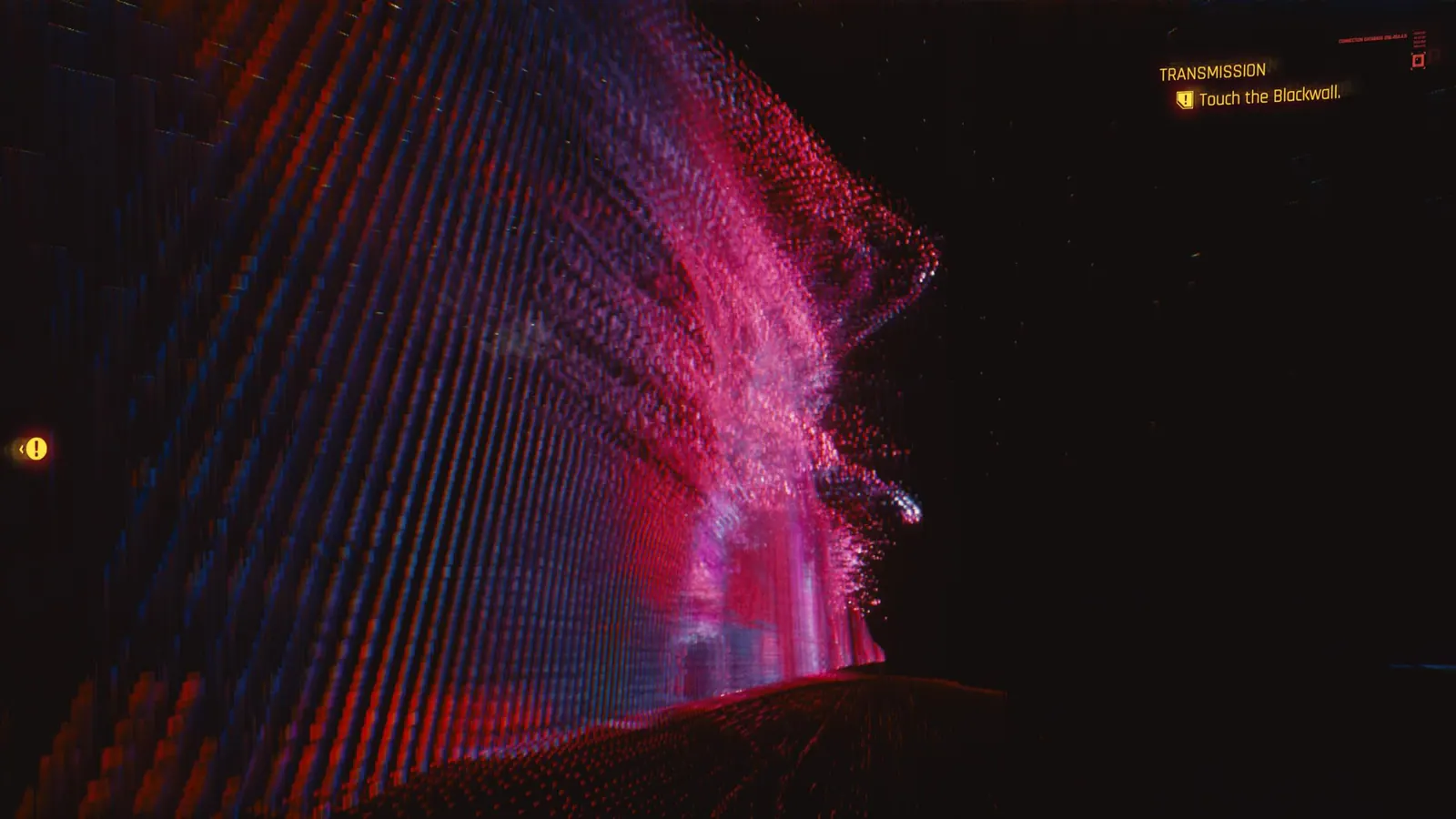
Cyberpunk’s internet is a ruin. In the lore, a hacker’s virus wrecked the old Net decades before 2077, and rogue artificial intelligences now live in the wreckage. A barrier called the Blackwall, maintained by an organisation named NetWatch, keeps them out of the network everyone else uses. Some AIs in the game are friendly, like Delamain, the taxi company that became a person. Others are treated like weather you hope never reaches you.
Real AI is nothing like a ghost behind a wall, but the story feels less far-fetched than it did in 2020. The 2026 International AI Safety Report, led by Yoshua Bengio with more than 100 experts, describes general-purpose AI improving quickly at mathematics, coding and acting on its own; in 2025 leading systems reached gold-medal level on International Mathematical Olympiad questions. It also records rising harm from deepfakes and fraud, and companies adding safeguards because tests couldn’t rule out misuse. My Talk 09 looked at an AI-assisted maths result that is still being argued over.
The difference that matters: Night City’s rogue AIs want things. Today’s systems don’t have goals of their own, but they are being given more autonomy, more access and more responsibility, and the hard questions are about who controls them and what they are allowed to do. The Blackwall is fiction; the arguments about building guard rails before you need them are not.

04
Cyberpsychosis: the price of chrome
Every cyberpunk story needs a cost, and this one is cyberpsychosis. Load too much chrome into one body and the mind starts to slip: the person feels detached from their own flesh, then from other people, and finally becomes violent. Night City even has a police unit, MaxTac, for putting cyberpsychos down. In Edgerunners, David survives on pills that stop his body rejecting the implants, and keeps adding more anyway. It doesn’t end well.

Cyberpsychosis isn’t real, but each part of it has a real echo.

Babe, please, no more implants
The whole of Edgerunners, in one image. Fan meme.
- The body fights back. Implants don’t get rejected like a transplanted organ, but the body walls them off with scar tissue. It is one reason brain electrodes tend to pick up weaker signals as the years go by. Real-world chrome needs ongoing care.
- “Am I still me?” Deep brain stimulation, where electrodes calm the symptoms of Parkinson’s or severe OCD, sometimes leaves people feeling changed. A 2017 study by Sanneke de Haan and colleagues interviewed 18 people with OCD about exactly that question, and ethicists still argue about what “a change of personality” even means.
- Chrome that’s abandoned. More than 350 people received Second Sight’s retinal implants. When the company wound down in 2020, many were left with devices in their eyes that no one could repair or upgrade. Night City’s ripperdocs would recognise the problem.
- Who owns your thoughts? In 2021 Chile changed its constitution to protect brain activity and neural data, and in 2023 its Supreme Court ordered a headset company to delete a user’s brain data. In the US, Colorado passed a neural-data privacy law in 2024. The law is starting to treat what’s in your head as something worth protecting.
Where the fiction goes too far
Metal doesn’t make you violent. Nobody with a prosthetic limb, a cochlear implant or a pacemaker is at risk of “cyberpsychosis”. The idea works as a metaphor for losing yourself to upgrades, not as medicine, and it shouldn’t colour how we see people who rely on medical implants.
The real risks are boring. Infection, surgery, batteries, software support, cost and data. Less dramatic than MaxTac, but they decide whether an implant actually helps someone for twenty years.
05
TLDR?
Fix first, upgrade later, maybe...
- 1Cyberpunk imagines implants as upgrades you buy. Real implants almost all restore something lost.
- 2Bionic arms, neural-controlled legs, retinal chips and brain–computer interfaces are real, and some are already helping patients.
- 3The Sandevistan’s slowed time and the engram’s copied mind remain fiction. The closest real steps are an 80 ms head start from muscle stimulation and wiring maps of tiny brains.
- 4Rogue AI behind a Blackwall is fiction, but fast-improving, more autonomous AI is a real debate today.
- 5Cyberpsychosis isn’t real, but scar tissue, identity changes, abandoned devices and neural privacy are.
Sources
- Kasahara, S., Nishida, J. & Lopes, P. Preemptive Action: Accelerating Human Reaction using Electrical Muscle Stimulation Without Compromising Agency. CHI 2019. PDF ↗
- Song, H., Hsieh, T.-H., Yeon, S.H. et al. Continuous neural control of a bionic limb restores biomimetic gait after amputation. Nature Medicine, July 2024. MIT Media Lab ↗
- PRIMA retinal implant trial, New England Journal of Medicine, October 2025. Science Corporation summary ↗
- Neuralink trial participants, January 2026. Report ↗
- MICrONS: a cubic millimetre of mouse visual cortex, Nature, April 2025. News report ↗
- Dorkenwald, S. et al. Neuronal wiring diagram of an adult brain. Nature 634, 124–138 (2024). doi ↗
- International AI Safety Report 2026 (chair: Yoshua Bengio), February 2026. internationalaisafetyreport.org ↗
- de Haan, S., Rietveld, E., Stokhof, M. & Denys, D. Becoming more oneself? Changes in personality following DBS treatment for psychiatric disorders. PLoS ONE 12(4), 2017. Record ↗
- Strickland, E. & Harris, M. Their bionic eyes are now obsolete and unsupported. IEEE Spectrum, 2022. Article ↗
- Chile’s neurorights amendment (Law 21.383, 2021) and the 2023 Emotiv ruling. Stanford Law ↗
- Timeline: first implanted pacemaker, 8 October 1958. Antonius Academie ↗
- Timeline: FDA approval of the 3M/House cochlear implant, 1984. ENT Today ↗
- Timeline: Medtronic Activa deep brain stimulation, FDA approval P960009 (1997). FDA record ↗
- Timeline: BrainGate, Hochberg et al., Nature 2006. ScienceDaily ↗
- Timeline: Argus II FDA approval, February 2013. Healio ↗
- Timeline: FDA allows marketing of the DEKA LUKE arm, May 2014. MDDI ↗
- Timeline: FDA approval of the OPRA implant system, December 2020. Healio ↗
- Timeline: Neuralink’s first human participant, January 2024. Wikipedia ↗
- Cyberpunk: Edgerunners 2 premiere date, CD PROJEKT RED press release. Press ↗
06
Personal Take
I have played Cyberpunk 2077 and finished its story, and watched Edgerunners through to the end. I have been fascinated by this genre ever since I got into engineering and learned about biomedical prosthetics. Honestly, I’m hyped about this technology and really interested in where it goes. But I’m also concerned about the ethics around it, and about the future the story portrays.
The engineering side is what pulled me in. Having built a prosthetic hand myself, I can’t watch a Mantis Blade unfold or a Kiroshi eye zoom without asking the questions my own project raised: where does the power come from, how does the machine know what you mean, and what happens where metal meets the body? The fiction skips all of that, which is exactly what makes it fun to pick apart.
And the hype is real. Ten years ago, a chip that lets people read again or a leg that the nervous system treats as its own would have sounded like Night City too. Once restoring a body works, improving one starts to look like a matter of time, and I want to see where that goes.
That is also where my concern starts. In the story, chrome belongs to corporations before it belongs to you, and staying un-upgraded means falling behind. Neither of those needs 2077 to come true. If an implant’s software, spare parts and data belong to a company, what happens when that company changes its plans? Who can afford the upgrades, and what happens to everyone who can’t? And if enhancement becomes normal, at work or in the military, is saying no still a real choice?
So I am hyped and wary at the same time. I want this technology to keep arriving, but I would like the rules on ownership, access and consent to arrive with it, not after the first people are left with chrome that nobody will support.
← Back to all talksDiscussion
Comments
Register with your email to join the discussion
No comments yet. Be the first to share your thoughts.